
Mistakes to Avoid
Top 9 Mistakes to Avoid When Selling an Ex-Council Flat
Ex-council flats sell well to the right buyers, but they come with quirks a private-build flat does not. These are the top 9 mistakes to avoid when you come to sell.
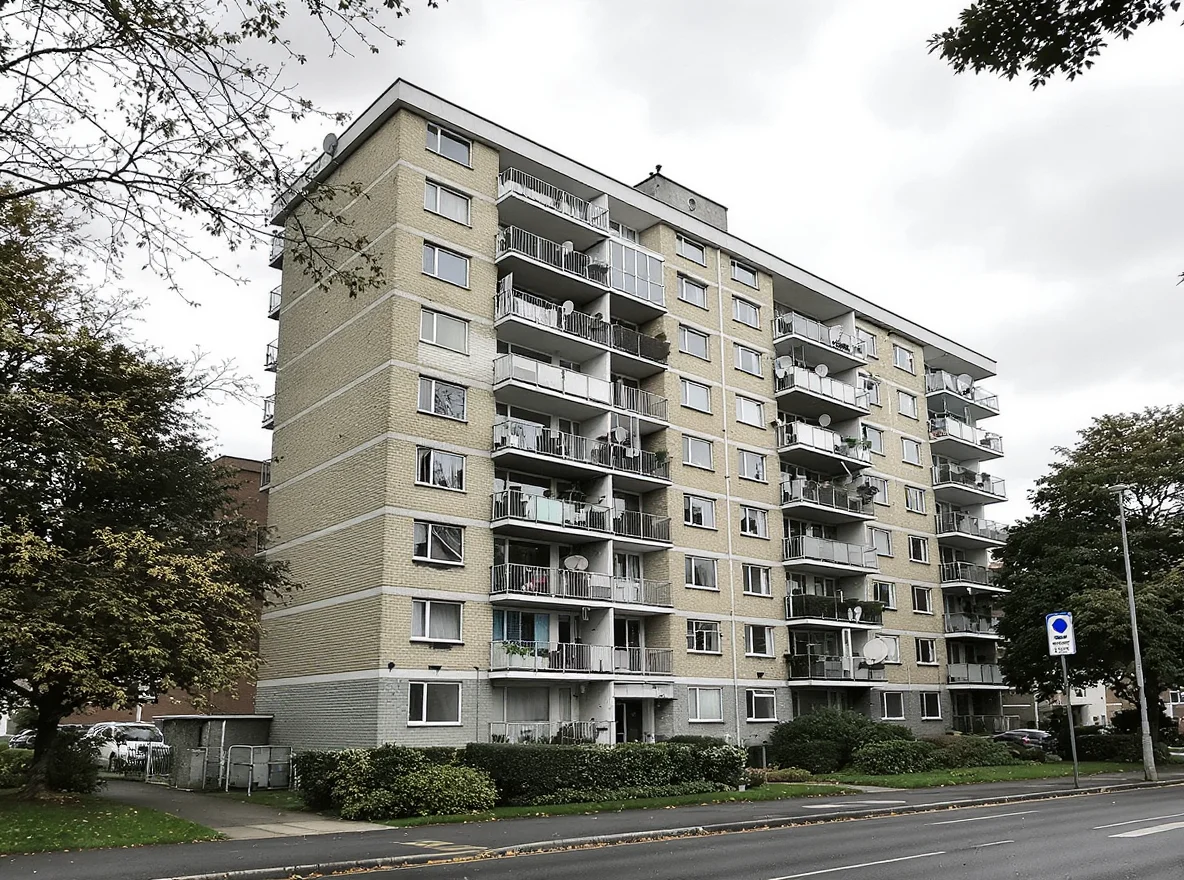
Ex-Council Flats Sell, but There's More to Get Right
Ex-council flats (more precisely, ex-local-authority flats) make up a large slice of the affordable end of the market, and they sell perfectly well to the right buyers. What trips sellers up is that they come with a set of quirks a private-build flat does not have: the way the block was built, the council as freeholder, large works bills, Right to Buy obligations and a more cautious set of mortgage lenders. Get ahead of these and the sale is straightforward. Ignore them and they surface late, usually once a buyer and their lender start digging.
This guide covers England and Wales. Right to Buy itself is now an England-only scheme: Wales closed it to new applicants in January 2019 and Scotland in 2016, though flats bought under it before then still carry their covenants wherever they are. The nine mistakes below are the ones that cost ex-council sellers the most time and money, and most come down to knowing what a buyer will find before they find it.
For the basics of pricing any flat, our guide on pricing mistakes to avoid sits alongside this one.
Mistake 1
Pricing It Like a Private-Build Flat
An ex-council flat almost always sells for less than a similar-sized private-build flat in the same area. The mistake is pricing it against the private-build flats down the road. Do that and the flat looks overpriced: it sits unsold, gathers a stale reputation and often sells for less than a sensible price would have achieved from the start. The discount reflects the construction, the look and feel of the block, the mix of owners and tenants and the narrower pool of lenders.
Set the price based on the right comparables: other ex-council flats that have sold recently, ideally in the same block or on the same estate, then similar blocks nearby. Sold prices are free to view on the HM Land Registry website. A flat priced realistically from day one sells faster, and usually for more, than one that starts high and drifts.
Mistake 2
Ignoring Non-Standard Construction
Many council blocks built between the 1950s and 1970s used non-standard methods: large panel system (LPS) concrete, or other forms of precast reinforced concrete (PRC). Brick-built council blocks are usually treated like any other flat. The concrete and system-built stock is where the trouble sits. Some of it is perfectly mortgageable, some needs a structural engineer's report before a lender will lend and a small amount sits on lenders' no-go lists or needs a specialist lender.
Find out how your block was built before you list, not after a buyer's survey throws it up. The council, a chartered surveyor or the block's records can usually tell you. If the construction is non-standard, knowing which lenders will lend (a broker who handles ex-local-authority flats is the person to ask) lets you price the flat and target the right buyers from the start, rather than watching a sale collapse at the lender's valuation weeks in.
Construction type and who will lend
How the block was built often decides the buyer pool more than the flat's condition does.
Brick-built
Treated like any other flat. Mainstream lenders will usually lend.
Concrete or steel frame
Variable. Often needs a structural engineer's report, or a specialist lender.
Large panel system (LPS)
Most mainstream lenders decline. Cash buyers and specialist lenders only.
Mistake 3
Overlooking the Owner-to-Tenant Ratio
Lenders pay attention to how many flats in the block are privately owned versus still rented from the council. A block where most flats have been bought is easier to lend on than one that is mostly council tenants with a handful of leaseholders. Some lenders set a minimum proportion of private ownership (often at least half the flats in the block), and many are wary of tall blocks, deck-access or balcony-access layouts or blocks above a certain number of storeys.
None of this is something a seller can change, but it is worth knowing the block's profile before you market the flat for sale. It explains why some lenders say no, helps set a realistic price and points you towards the buyers and lenders who will actually proceed. A good local agent and a specialist broker will know how your particular block is viewed.
Mistake 4
Cladding and EWS1 on Tall Blocks
Plenty of ex-council blocks are tall enough to bring building safety into the sale. If the block is over 11 metres and has cladding, the sale can hinge on an EWS1 form (the External Wall System assessment that records a fire-safety view of the external walls) and on where the building sits in the remediation programme. A buyer's lender may still want to see it, though lender requirements have relaxed since 2022. Our guide on EWS1 and cladding explains the form and the ratings in full.
The leaseholder protections under the Building Safety Act 2022 can apply to ex-council blocks, but the picture (council as freeholder, public funding streams, long remediation queues) has its own timeline and is worth checking case by case. Do not assume there is nothing to worry about, and do not assume the worst either. Ask the council for the current EWS1 and the building's fire risk assessment early, so you know where you stand before a buyer asks.
Does the block need an EWS1?
A rough guide by building height. The buyer's lender has the final say.
An EWS1 records a fire-safety view of the external walls. Lender requirements have eased since 2022, so treat this as a starting point.
Mistake 5
Being Blindsided by Major-Works Bills
Council freeholders are well known for large major-works bills: new windows, a new roof, lift replacement, balcony or structural repairs, sometimes running to tens of thousands of pounds per flat. Where the cost is above a set threshold, the council has to consult leaseholders first under Section 20 of the Landlord and Tenant Act 1985 (the formal major-works consultation procedure), so there is usually warning that something is coming.
A pending or estimated bill has to be disclosed, and a buyer will price it in or walk away if it lands as a surprise late on. Find out whether anything is planned before you list: ask the council, and look at any recent Section 20 notices for the block. Our guide on service charges covers how these bills work and what a buyer will want to know.
Mistake 6
Falling Into the Right to Buy Traps
Two Right to Buy (RTB) rules catch sellers out, and both are general information worth checking against your own paperwork. The first is the discount repayment. If you sell within five years of buying under Right to Buy, you repay a share of the discount: all of it in the first year, then four-fifths, three-fifths, two-fifths and one-fifth across years two to five, worked out on the resale value of the flat rather than the original price. This applies to purchases completed since 18 January 2005, and after five years nothing is repayable. Reforms announced in April 2026 are set to extend this repayment period (to ten years) and are expected to take effect during 2026/27, so check the current position when you come to sell.
The second is the offer-back, or right of first refusal. For ten years after buying, you usually have to offer the flat back to the council (or a social landlord they nominate) at full market value before you can sell on the open market; the council has eight weeks to decide. The terms sit in your transfer deed or lease as a covenant, so read them and speak to the council early. The official position is set out on gov.uk. For anything that turns on your own figures, a conveyancing solicitor is the person to confirm it with.
The Right to Buy discount taper
Sell within five years and you repay a share of the discount, worked out on the flat's resale value. The share falls each year.
After five years nothing is repayable. Reforms announced in April 2026 are set to extend this repayment period to ten years, expected during 2026/27.
Mistake 7
Treating the Council as a Normal Freeholder
When the freeholder is the council, the management pack and the answers to the buyer's leasehold enquiries can be slow, sometimes far slower than a private managing agent. Service charge accounts can be hard to follow, and estimated major-works figures can land late in the process. This is one of the most common reasons an ex-council flat sale drags on.
Build the council's pace into the timetable. Request the management pack as early as is sensible (it has a limited shelf life, so somewhere around the point you go to market is usually right), and chase it: a leaseholder often gets a quicker answer from the council than a solicitor's admin team. If a slow pack is the only thing holding the sale up, staying on top of the council is the single most useful thing you can do.
Mistake 8
Using an Agent Who Does Not Know Ex-Council Stock
A generalist agent can price an ex-council flat wrong, market it to the wrong people and lose weeks doing it. These flats sell to a particular pool: cash buyers, buy-to-let investors and first-time buyers, often using specialist rather than mainstream lenders. An agent who has sold ex-local-authority flats in the area recently knows the realistic price, knows which lenders will lend on the block and knows how to present the flat to the people who actually buy them.
Ask each agent how many ex-council flats they have sold locally in the past year, and ask to see the comparable sold prices behind their valuation. The right agent is the one with the track record and the evidence, not simply the one who quotes the highest figure to win the instruction.
Mistake 9
Writing the Flat Off as Unsaleable
When mainstream lenders will not touch a block (non-standard concrete construction, cladding without an EWS1, a low proportion of private ownership), it is easy to assume the flat simply cannot be sold. It can. The buyer pool narrows to cash buyers, investors and buyers using specialist lenders, and the price reflects that smaller market, but there is a genuine market for these flats. Our pages on ex-local-authority flats and unmortgageable flats explain how those sales tend to work.
For a seller who needs certainty or speed, a cash buyer completes without a lender at all, which sidesteps the construction, cladding and ownership-ratio questions in one go. The price reflects the work the buyer is taking on, so it is a trade-off rather than a free lunch, but it is a real option when the open market is narrow or a deadline is tight.
Further Reading
Two related guides go further: how we buy ex-local-authority flats, and the pricing mistakes that catch out flat sellers in general.
Frequently Asked Questions
Not necessarily harder, but different. Ex-council flats sell well at the right price to the right buyers, and they are often the affordable way into an area. The things that complicate a sale are the construction type, the council as freeholder, possible major-works bills, Right to Buy obligations and a more cautious set of lenders. Deal with each before you list and the sale runs much like any other; ignore them and they surface late.
A handful of things combine: the construction and appearance of the block, the mix of owners and council tenants, the service charge, any looming major works and the narrower pool of lenders willing to lend. The result is that ex-council flats usually sell at a discount to an equivalent private-build flat nearby. Base it on other ex-council sales in the same block or estate rather than the private-build flats down the road.
Often yes, but it depends on the block. Brick-built blocks are usually treated like any other flat. Concrete and system-built blocks are more variable: some are mortgageable with mainstream lenders, some need a structural engineer's report and some need a specialist lender or are cash-only. Lenders also look at the height of the block, the access type and the proportion of privately-owned flats. A broker who handles ex-local-authority flats is the best person to identify which lenders will look at a particular block.
Only if you sell within five years of buying under Right to Buy. For purchases since 18 January 2005, you repay the whole discount in the first year, then four-fifths in year two, three-fifths in year three, two-fifths in year four and one-fifth in year five, calculated on the resale value of the flat rather than the original purchase price. After five years nothing is repayable. Reforms announced in April 2026 are set to extend this repayment period (to ten years) and are expected to take effect during 2026/27, so check the current position when you come to sell. This is general information; your own figures should be confirmed with your solicitor and the council.
Usually, if you are selling within ten years of buying under Right to Buy. Most Right to Buy transfers since 18 January 2005 carry a right of first refusal: you have to offer the flat back to the council (or a social landlord they nominate) at full market value before selling on the open market, and the council has eight weeks to decide. The exact terms are in your transfer deed or lease, so check them and speak to the council early in the process.
Section 20 of the Landlord and Tenant Act 1985 is the procedure the freeholder must follow to consult leaseholders before carrying out major works above a set cost. On council blocks these bills can be large (new windows, roofs, lifts or structural repairs), so a pending or estimated bill matters to a buyer and has to be disclosed. Find out before listing whether anything is planned, because a major-works bill that lands during conveyancing is a common reason a buyer renegotiates or pulls out.
It depends on the height of the block and whether it has cladding. As a rough guide, blocks over 18 metres almost always need one, blocks between 11 and 18 metres usually need one if there is cladding, and lower blocks rarely do. An EWS1 is the External Wall System assessment that records a fire-safety view of the external walls, and a buyer's lender may still ask for it, though lender requirements have eased since 2022. Ask the council for the current form early. Our EWS1 and cladding guide covers the ratings and what they mean for a sale.
Yes. Where mainstream lenders decline the block, the flat still sells to cash buyers, investors and buyers using specialist lenders, at a price that reflects the smaller market. A cash buyer can complete without a lender at all, which removes the construction, cladding and ownership-ratio questions in one step. It is a trade-off on price against speed and certainty, but an ex-council flat that no high-street lender will touch is far from unsaleable.