Cash Buyer. No Block Restrictions.

We Buy Ex-Local Authority Flats

Ex-council and ex-housing association flats often face mortgage restrictions that limit the buyer pool. As cash buyers, those restrictions do not apply to us. We assess the flat on its own merits.

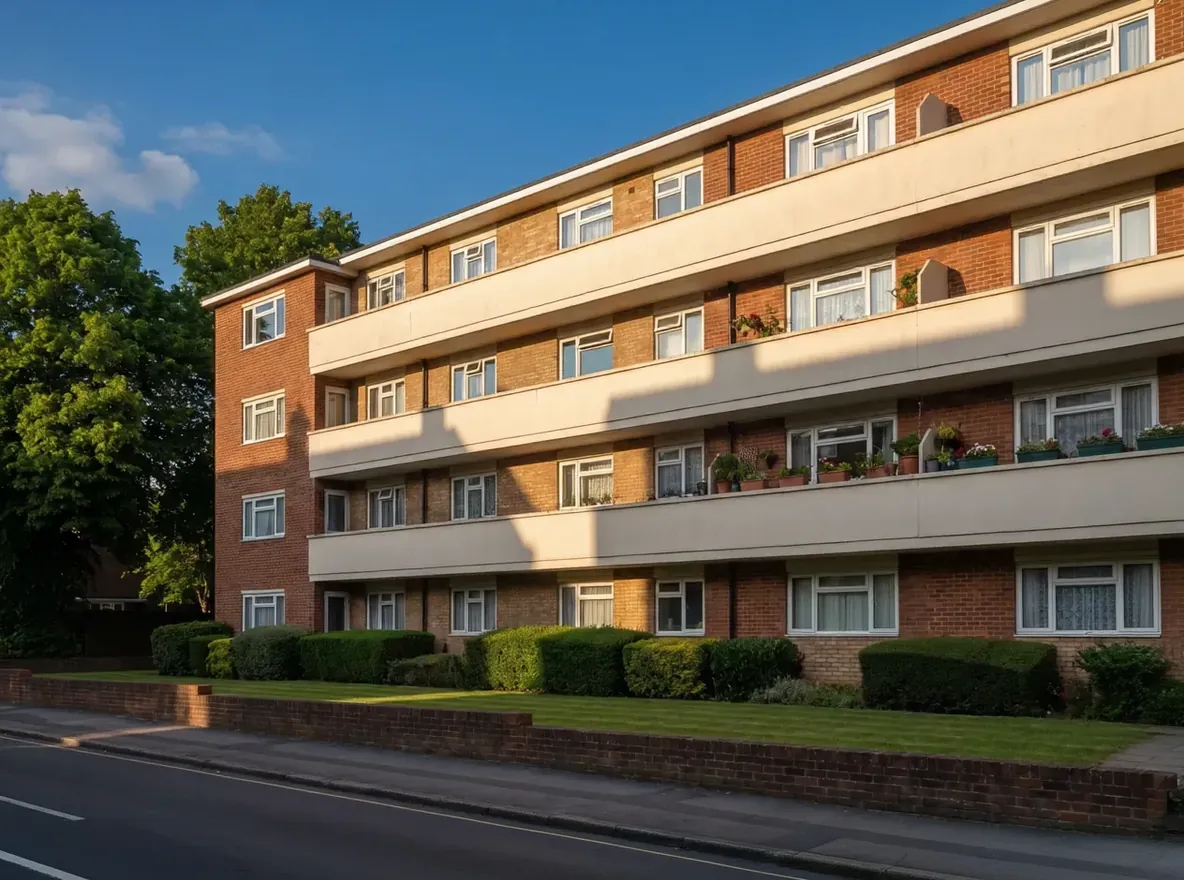
A well-kept four-storey ex-council brick block of flats in afternoon sunshine, with planted balconies and a clipped hedge

Why Ex-Council Flats Are Harder to Sell

Many mortgage lenders apply restrictions to ex-council flats that they do not apply to other residential property. Those restrictions can relate to the block itself, the postcode, the construction type, the floor height, or the proportion of the block still in council or housing association ownership.

When a buyer's mortgage application is declined because of the block they are buying in, the sale collapses. Sellers are left having to find another buyer, one who either does not need a mortgage, uses a different lender, or does not know about the restriction until it is too late. That cycle can repeat, leaving sellers unable to sell despite having a flat that is perfectly habitable.

If you are selling through an estate agent, find out early whether your block is of non-standard construction, such as concrete panels or a steel frame, and how many storeys it has. These are amongst the first things a buyer's lender will check. The freeholder, often still the council, can usually tell you both, and knowing in advance saves an unwelcome surprise after an offer has been agreed.

We buy ex-council flats with our own cash, so no mortgage lender is involved and block restrictions and panel rules do not apply to us. We assess the flat, the location and the building, not whether a particular bank's criteria are met.

We Buy Ex-Council Flats: mortgage restrictions, non-standard construction and high-rise rules are not a problem for a cash buyer

Types of Mortgage Restriction on Ex-Council Flats

The restriction can come from several directions at once.

Block-Specific Restrictions

Some lenders maintain lists of specific blocks or estates where they will not lend, regardless of the individual flat's condition or value. Buyers cannot know this until they apply. When the restriction emerges, the sale collapses. We are not bound by these lists and buy on the flat's actual merits.

Non-Standard Construction

Post-war council housing was commonly built using concrete panels, large-panel systems, or steel frames, construction types that many lenders will not touch. Most are perfectly habitable, but non-standard construction closes most mortgage doors regardless of actual condition. Cash buyers are not subject to this restriction.

High-Rise and Floor Height Rules

Many lenders will not advance on flats above a certain floor in a high-rise block, and the threshold varies from one lender to another. For owners of upper-floor flats in taller blocks, that leaves a much smaller pool of buyers, weighted towards those purchasing with cash.

Right to Buy and Ex-Council Sales

Many ex-council flat owners purchased their home through the Right to Buy scheme. This gives long-standing council tenants the right to buy their home at a discount. Since 1980 just over 2 million homes in England have been sold this way, according to government figures published in August 2026, and a large share of them were flats in council blocks. Right to Buy is now an England-only scheme. Wales abolished it for all tenants on 26 January 2019, under the Abolition of the Right to Buy and Associated Rights (Wales) Act 2018. Flats bought there before that date still carry the resale rules set out below.

Two Right to Buy rules catch sellers out. Both are general information rather than advice, so check them against your own paperwork and ask your solicitor how they apply to you.

The first is the discount repayment. If you sell within five years of buying, the council can ask for some of the discount back. You repay all of it in year one, then four fifths, three fifths, two fifths and one fifth across years two to five. After five complete years nothing is due. One detail catches people out. The bill is worked out as a percentage of your sale price, not of the cash discount you were given. On a flat that has risen in value, it can come to more than the discount itself.

The second is the right of first refusal, and it lasts twice as long. If your flat was bought under Right to Buy on or after 18 January 2005, the deeds carry an extra obligation. Before you sell to anyone else, you have to offer it back to your former landlord, or another social landlord in the area, at full market value. That runs for ten years from the date of purchase. It applies right across England, in city blocks just as much as in the countryside. The landlord has eight weeks to say yes. Flats bought before 18 January 2005 do not carry it.

A separate rule covers flats in national parks, areas of outstanding natural beauty and areas the government has designated as rural. There the former landlord can require its written consent to a sale, and can insist the buyer has lived or worked locally for the past three years. That restriction has no end date; it stays on the title until the landlord lifts it. Gov.uk sets out the resale rules.

More change is coming, though none of it is law yet. The Social Housing Bill, going through Parliament now, would extend the discount repayment period from five years to ten and make the right of first refusal last indefinitely rather than for ten years. It reached its Commons second reading on 10 September 2026 and has further stages to clear, with no start date announced. The rules above are the ones that apply today.

We buy former Right to Buy properties, including those where the discount repayment period or the right of first refusal period has ended. We assess the flat on its current merits, location, condition, lease length, and any building-specific complications, and make an offer that reflects all of these factors transparently.

Why Ex-Council Flat Owners Choose Us

Owners of ex-council flats typically have three routes: the open market with an estate agent (private treaty), auction, or direct sale to a cash buyer like us. Each has trade-offs, and the right one depends on whether headline price, speed, or certainty matters most.

The open market can work, but the same lender restrictions that make ex-council flats hard to mortgage often collapse buyer chains. A failed sale is common here, and some sellers go through more than one before completing.

Auction suits ex-council stock because the buyer pool is investor-led and used to non-standard construction, restricted blocks and floor-height rules. The trade-off is a price typically below open-market value, and a binding commitment on the day. Selling direct to us is the fastest and most certain route, with no lender involved at any point; the trade-off is the lowest headline price, reflecting the restricted buyer pool and our resale margin.

If you have time and want the highest possible price, the open market is the usual answer; just expect the lender hurdle to come up. If certainty matters and an auction price works for you, auction suits ex-council flats well. If you have already lost buyers to mortgage restrictions and want a sale that actually completes, sell direct.

Frequently Asked Questions

Yes. Lender restricted lists are a commercial decision by each lender; they reflect the lender's risk appetite, not the flat's actual value. As cash buyers, we are not on any lender's panel and we are not bound by their restrictions. We assess the flat on its own merits.

Not directly, though two rules may affect your timing. If you sell within five years of buying under Right to Buy, the council can ask for some of the discount back, tapering to nothing after five complete years. The bill is worked out on your sale price rather than on the discount you were given. Separately, where the flat was bought on or after 18 January 2005, you must offer it back before selling to anyone else. That means your former landlord, or another social landlord in the area, for ten years from the date of purchase. That applies right across England, in city blocks as well as rural areas. This is general information rather than advice, so check your own paperwork with your solicitor. Once both periods have passed, Right to Buy history does not affect our offer.

High-rise blocks do create additional considerations: construction type, fire safety, cladding, service charge levels, all of which we assess before making an offer. Many lenders will not lend on high-rise ex-council blocks above a certain floor, which limits the buyer pool. We can buy where lenders will not lend.

One point is worth knowing before you price the flat, because it is often good news. The Building Safety Act 2022 protects qualifying leaseholders in buildings at least 11 metres tall or at least five storeys. If your lease qualified on 14 February 2022, you pay nothing towards removing unsafe cladding, and contributions towards other fire safety work are capped. Those protections belong to the lease rather than to you, so they pass to your buyer. A buyer's lender may still ask for an EWS1 form, the External Wall System assessment used to confirm the fire safety of the outside walls.

A short lease alongside ex-council status is a combination we buy regularly. We assess both factors and make a single offer that reflects the whole picture. You do not need to extend the lease before selling to us.

Get a Cash Offer for Your Ex-Council Flat

No block restrictions. No lender criteria. Cash offer in days.

Lines open Monday-Friday, 09:00-18:00