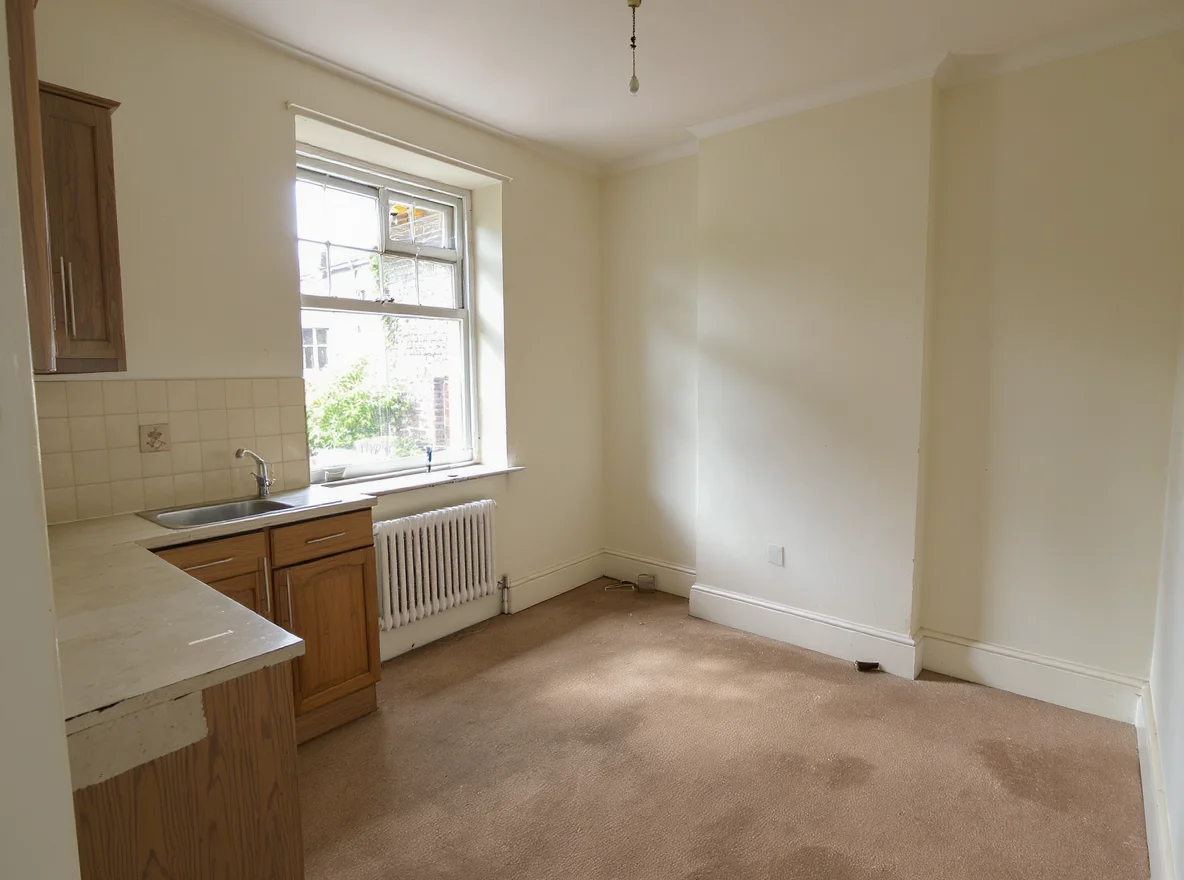
How We Value an Unmodernised Flat
We start with the end value: what the flat would be worth once modernised, in today's market, in that location. We then work backwards, taking off the cost of the refurbishment and our margin for doing the work. Investors sometimes call this the after-repair value, or ARV. Whatever the label, it gives both of us a transparent basis for the offer.
We do not guess at refurbishment costs. We have been buying and refurbishing leasehold flats for over 20 years, and we have a clear understanding of what it costs to update a kitchen, a bathroom, the wiring and the plumbing in flats of any size, across England and Wales.
Our offer will be below what the flat would achieve fully modernised, and below what it might achieve unmodernised through an estate agent given enough time. Across the flats we buy, that works out at roughly 15 to 30 percent below open-market value. The gap is the refurbishment cost, our margin and the certainty of a sale that does not depend on a survey. For sellers who do not want to project manage a renovation or fund it themselves, that trade-off is often worth making. Compare our written offer with what an agent expects to achieve after refurbishment, holding costs and fees, and decide on the numbers.
What we need to know up front
Buying as seen does not mean buying blind. Tell us early about anything you know: damp or movement, works carried out in the past and whether the freeholder consented to them, anything started and not finished, and the lease length and service charge position. You complete the same TA6 and TA7 property information forms as in any sale (the Law Society forms every seller in England and Wales fills in; since 30 March 2026 only the sixth edition of the TA6 is accepted), and the answers have to be honest. Telling us at the start is what keeps the written offer steady.
If a past alteration turns out to have no consent, tell your solicitor before anyone contacts the freeholder. Approaching the freeholder first can rule out an indemnity policy, and your solicitor will know whether retrospective consent, insurance or a price adjustment fits the case.
The lease itself is worth a look too. Many unmodernised flats sit in older converted houses, and their leases can be as dated as the kitchen: a missing right of support, no clear duty to repair the roof, or service charge shares that do not add up. None of that stops us buying, but knowing about it early keeps the legal work short. Our guide to reading your lease shows what to look for.