
Sellers' Guide
Selling a Flat With No Heating, a Broken Boiler or Old Storage Heaters
How easily a flat with heating problems sells depends on two things. The first is whether the heating is missing, broken or simply old. The second is who owns the system: you or the building. This guide explains who is responsible for repairs, how mortgage lenders react, what the work costs and whether to fix the heating before you sell.
Can You Sell a Flat With Heating Problems?
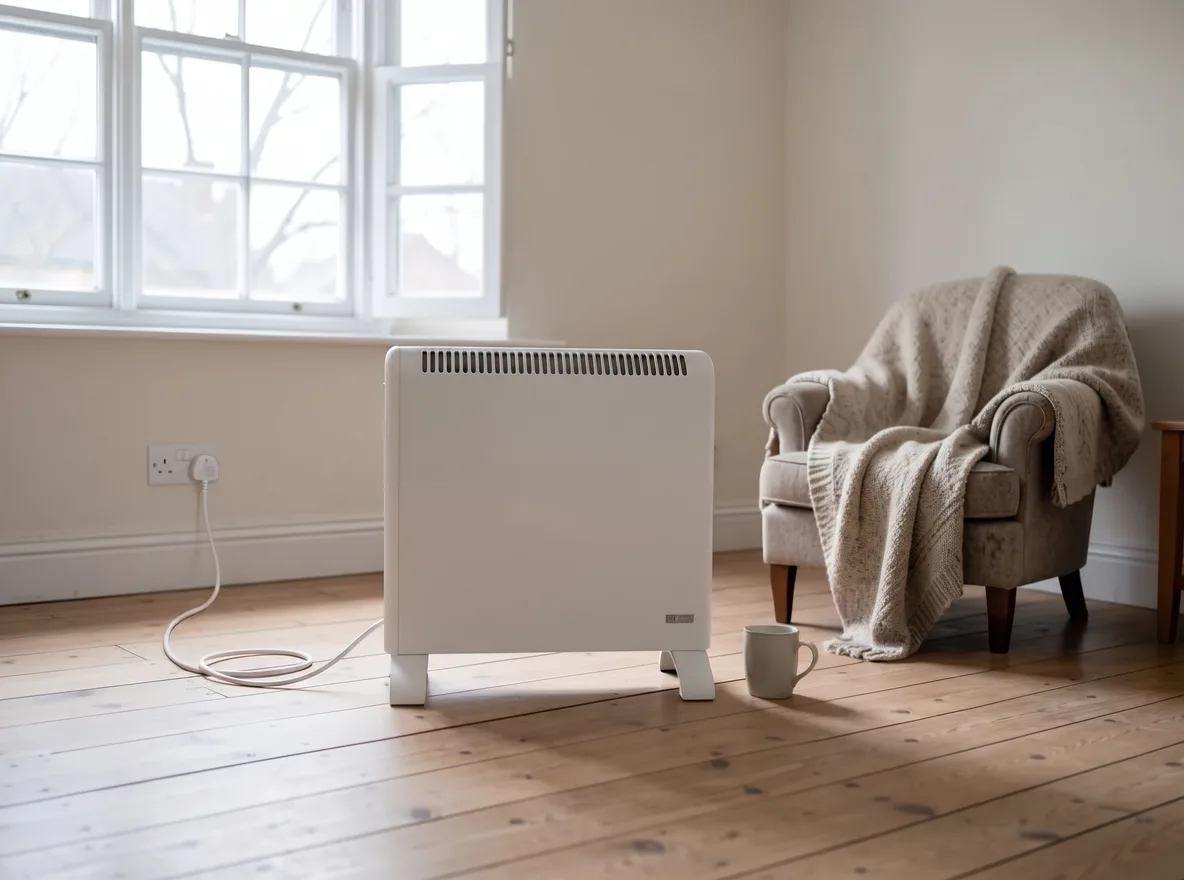
Buyers spot heating problems quickly. They see the plug-in heater in the corner or the old boiler with no signs of life, its pressure gauge at zero. Then they start working out what it will cost to put right. Some buyers estimate too high and offer less than the work justifies. Others estimate too low, and often ask to reduce their offer later, once a survey or a quote shows the real cost.
In a leasehold flat there is a second question that a house seller never faces: whose system is it? A boiler in your kitchen cupboard is usually yours. A communal boiler in the basement is the freeholder's, and you pay for it through the service charge. That difference decides whether you can arrange a repair yourself or have to report the fault to the freeholder. It also changes the questions the buyer's solicitor will ask.
This guide is general information, not legal, tax or heating engineering advice. It covers England and Wales.
Written and kept up to date by the Sell Flat UK team at LDN Properties Ltd, who have bought flats with heating problems since 2003. Last reviewed on 13 November 2026.
No Heating, Broken Heating or Old Heating: What Is the Difference?
Buyers, surveyors and mortgage lenders treat the three situations differently. Each situation is covered below.
No heating system at all
In this situation, the flat has no boiler and radiators, no storage heaters and no connection to a communal system. The only heat may come from a gas fire in one room or a few plug-in heaters. Either a heating system was never fitted, or an old system was removed and not replaced. This is most common in flats that have not been modernised for many years; we often see it in probate sales.
A flat with no heating system is harder to sell to a buyer who needs a mortgage than a flat with broken or old heating. The flat usually gets a low rating on its Energy Performance Certificate (EPC), and the buyer's surveyor will report the lack of heating. The mortgage lender's valuer may then put a lower value on the flat. The lender can also refuse to lend or hold back part of the loan until heating is installed.
This situation also takes the most work to put right. A whole heating system has to be installed, and installing one in a leasehold flat can need the freeholder's consent.
A faulty or broken system
In this situation, the flat has a heating system, but the system either does not work at all or does not work properly. Examples are a boiler that has stopped working, storage heaters that no longer heat up, radiators that stay cold and a communal system that keeps breaking down.
Buyers treat broken heating as a repair they will have to pay for, so they offer less. If the fault is inside your flat, you can get a written quote for the repair for your own use. You will then know what the work really costs if a buyer asks to reduce their offer.
Two of the more difficult faults to deal with are:
- a fault in the building's communal heating system, which you cannot repair yourself and have to report to the freeholder
- a gas boiler that an engineer has turned off as unsafe, which is covered under gas central heating below
An old or outdated system
The least serious of the three situations is a heating system that works, but is dated. Examples are storage heaters from the 1980s, a boiler that is 20 years old and warm-air heating. A surveyor will often write that the system is "towards the end of its expected life", which is not the same as "needs replacing now". Some buyers will ask for a reduction in the sale price, and you do not have to agree. Our guide to responding to the buyer's survey explains how to tell a new problem from an attempt to negotiate the price down.
How Common Are Heating Problems in Flats?
Official figures show how homes are heated, but they do not record whether the heating works:
- No central heating: 367,000 households in England and Wales, or 1.5 percent, at the 2021 Census. Outside the Isles of Scilly, the highest share was in Westminster at 3.9 percent.
- Electric central heating only: 2.1 million households, or 8.5 percent, at the same Census. Mains gas alone heated 73.8 percent.
- Storage heaters: the main heating in about 1 million homes in England in 2022, or 5 percent, according to the English Housing Survey.
- Communal heating: the main system in 646,000 homes in England in 2023. It served 11 percent of flats and 0.2 percent of houses.
Location and the type of building matter more than the national average. Storage heaters are concentrated in purpose-built buildings from the 1960s to the 1980s, many of which were built without a gas supply. Flats with no heating at all tend to be older conversions that were never modernised. Communal systems are found mainly on ex-council estates and in new developments built since about 2010, and London has more registered heat networks than any other English region, at just over 3,500.
You can check for free what heating the other flats in your building have. Search by postcode on gov.uk's find an energy certificate service. Each certificate names the flat's main heating at the date it was issued, which can be up to ten years ago.
If the other flats have the same heating as yours, the prices they sold for already reflect that heating, which gives a buyer less reason to reduce their offer. If most of the other flats have newer heating, expect buyers to deduct the cost of the same upgrade from their offer.
How Does the Type of Heating Change Things?
Electric-only heating
Electric-only heating means the flat has no gas and is heated by electricity. There are two kinds of electric heating, and the difference matters when you sell:
- Fitted electric heating. This means storage heaters, wall-mounted panel heaters or an electric boiler with radiators. They are wired in and fixed in place, so they are part of the flat and are sold with it.
- Plug-in heaters. These include oil-filled radiators, convector heaters, fan heaters and anything else that runs from an ordinary socket and can be moved from room to room. They are your belongings, not part of the flat.
Surveyors and EPC assessors do not count plug-in heaters as a heating system. A flat heated only by plug-in heaters counts as having no heating system at all.
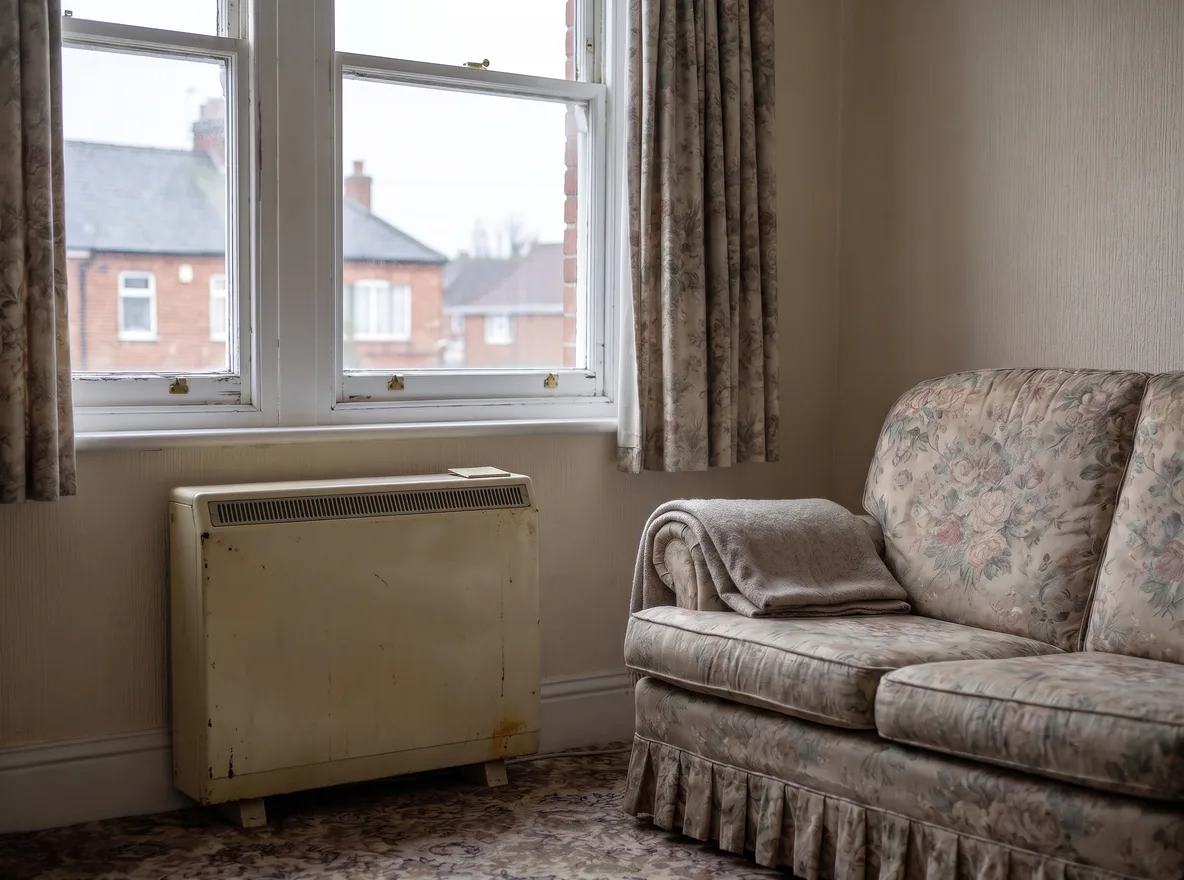
Storage heaters and panel heaters work differently. Storage heaters store heat overnight, using electricity on a cheaper off-peak tariff such as Economy 7, and release the heat during the day. Panel heaters use electricity whenever they are on, at the full daytime rate.
For a seller, fitted electric heating is the simplest type to deal with. The heaters are inside your flat and belong to you, and replacing them does not normally need the freeholder's consent. An electrician can usually replace a broken storage heater in an hour or two.
Check the electricity meter as well. Many older storage heaters were switched to cheap-rate electricity by a radio signal, known as the Radio Teleswitch Service, which was switched off for good in June 2026. If the old meter was never replaced, the heaters may charge at the wrong time of day, or stay on or off all the time. Your electricity supplier must replace the meter, and there is no charge.
The drawback of electric heating is a lower EPC rating. The rating on the current certificate is based on running costs, and electricity costs more per unit than gas, so flats with electric heating tend to get lower ratings than flats with gas heating.
Old storage heaters with manual controls get a low rating. Modern storage heaters, known as high heat retention storage heaters, hold their heat for longer, cost less to run and usually improve the rating. Our page on whether you need an EPC to sell your flat explains how the rating is worked out and what is changing in 2027.
If the building has no gas supply, changing to gas heating is not realistic. The other flats in the building will have electric heating too, so electric heating will not count against your flat when buyers compare it with the others.
Gas central heating
A gas boiler with radiators is what most buyers expect, and a working one rarely causes a problem in a sale. The boiler usually belongs to you, and you are responsible for it. In a flat, three things can cause difficulty:
- The flue. The flue is the pipe that carries the boiler's waste gases outside. It passes through an outside wall, and in most leases that wall belongs to the freeholder. Fitting a boiler in a new position, or fitting one that needs a new hole in the wall, usually needs the freeholder's consent.
- The certificate. Since 1 April 2005, every new or replacement boiler has had to be reported to the council's building control department. The installer normally does this through Gas Safe Register (CORGI before 2009), and you then receive a Building Regulations Compliance Certificate. The buyer's solicitor will ask for that certificate.
- A flue hidden above the ceiling. In some flats built since about 2000, the boiler is on an inside wall and its flue runs through the space above the ceiling to reach the outside. A gas engineer has to be able to inspect the whole length of the flue. If there are no inspection hatches in the ceiling, the engineer will class the boiler as "at risk" and, with your permission, turn it off. The usual fix is to fit inspection hatches. It is a small job, but sellers often find out about it only during the sale.
Communal and district heating
In a communal heating system, the whole building is heated from one boiler room, known as the plant room, and hot water is piped to each flat. District heating works the same way on a larger scale, with one energy centre serving several buildings. Both are known as heat networks.
Inside your flat there is usually a heat interface unit, or HIU. This is a box about the size of a boiler that passes heat from the building's pipes to your radiators and taps.
The boilers and the shared pipes do not belong to you. The freeholder or a heat supplier runs them, and you pay for the heat through the service charge or a separate heat bill. This affects a sale in three ways:
- You cannot repair a fault in the shared system yourself. You have to report the fault to the freeholder or the heat supplier.
- Your buyer takes on a share of what the system costs to run and, in time, to replace.
- You usually cannot disconnect your flat from the system. Council freeholders such as Southwark and Tower Hamlets say they do not normally allow leaseholders to disconnect.
A modern system that is well run does not cause a problem in a sale, and a flat on one can get a good EPC rating. An old, unreliable system makes a flat harder to sell, as buyers will expect to pay a share of a large replacement bill through the service charge.
How big a hurdle is it?
Three situations, three types of heating
| Electric only | Gas central heating | Communal heating | |
|---|---|---|---|
| No heating at all | Medium hurdleHeaters can be fitted in days, usually without consent. Expect a low EPC rating until they are. | High hurdleA new system needs a gas supply, a flue and usually the freeholder's consent. | High hurdleRare. It usually means the flat was cut off or the building's system has failed. |
| Broken or faulty | Low hurdleReplace the failed heaters. A small, quick job. | Medium hurdleRepair or replace the boiler. Check the flue and find the certificate. | Medium hurdleA fault in the flat's own unit may be yours to fix. A fault in the shared system is the freeholder's. |
| Old but working | Low hurdleOld storage heaters lower the EPC rating and put some buyers off. | Low hurdleService the boiler and keep the record. | Medium hurdleAsk what work is planned. An ageing system can mean a large bill ahead. |
Who Is Responsible for the Heating in a Leasehold Flat?
Your lease sets out which parts of the building you own, known as the demise, and which parts the freeholder keeps. The usual rule is that anything serving only your flat is yours, and anything serving more than one flat is the freeholder's. Wording varies, so read the definitions and the repairing clauses, or ask your solicitor to. Our guide on how to read your lease shows where to look.
Whose pipe is it?
Following the heat from the plant room to your radiator
-
The plant roomFreeholder
Communal boilers, pumps and the connection to a district network. Paid for by all leaseholders through the service charge.
-
Risers and shared pipesFreeholder
The pipework in corridors, service cupboards and the walls between flats.
-
The heat interface unit and heat meterDepends on the lease
The box inside your flat that takes heat from the communal pipes. Some leases make it yours, others the freeholder's.
-
The boiler flueYours, in the freeholder's wall
The flue is part of your boiler, but it passes through an outside wall that usually belongs to the freeholder. A new hole needs the freeholder's consent.
-
Everything that serves only your flatYou, the leaseholder
Your own boiler, storage or panel heaters, radiators, the hot water cylinder and the pipes inside the flat.
When you need the freeholder's consent
Most leases do not allow you to alter the flat, or anything outside it, without the freeholder's written consent. That consent is given in a document called a licence to alter. For heating, expect to need one for:
- a new boiler flue or condensate pipe through an outside wall
- changing the type of system, for example from electric to gas
- an outdoor heat pump unit on a wall, balcony or roof, which may also need planning permission
- disconnecting from a communal system, which is often refused
- wet underfloor heating, because of the weight and the risk of leaks to the flat below
Replacing a boiler in the same position using the existing flue, or swapping one electric heater for another, does not normally need consent. Some leases also ban gas appliances altogether. A straightforward licence typically costs £500 to £2,000 once the freeholder's surveyor and solicitor are paid, and takes weeks, so build it into your timetable. Our guide to licences to alter explains the process.
In a building that is at least 18 metres high or has at least seven storeys, some heating work also needs approval from the Building Safety Regulator.
If a previous owner, or you, changed the heating without the freeholder's consent, do not rush into contacting the freeholder about it yourself. Speak to your solicitor first, as contacting the freeholder can put you in a weaker position.
Missing consent is usually dealt with on a sale in one of three ways:
- An indemnity policy. This is insurance that protects the buyer if the freeholder later takes action over the missing consent. It is usually the quickest and cheapest of the three, but insurers will normally offer one only if the freeholder has not been told about the alteration.
- Consent granted after the work. The freeholder agrees to the alteration in a licence. This usually costs more and takes longer than an indemnity policy.
- A lower sale price. The buyer accepts the missing consent in return for paying less for the flat.
So a letter or phone call to the freeholder, even a friendly question, can rule out the indemnity policy and leave you with the slower and more expensive options. Our guide to selling a flat with unauthorised alterations explains each one.
How this differs from a freehold house
The owner of a freehold house owns the whole heating system and the walls it passes through. They can replace a boiler, move a flue or fit a heat pump without asking a landlord (the freeholder), as long as the work meets building regulations and planning rules.
A leaseholder has less control over repairs and alterations and, with communal heating, less control over the cost.
How Do Communal Heating Costs Reach You Through the Service Charge?
If you have your own boiler, you pay your own gas bill and the cost of any repairs. With communal heating, the freeholder pays for the fuel, maintenance and repairs for the whole building, then recovers the cost from the leaseholders.
The lease sets out how the cost is shared between the flats, in one of three ways:
- by a fixed percentage for each flat, written into the lease
- by floor area, so that a larger flat pays a larger share than a smaller flat
- by the heat each flat uses, where each flat has its own heat meter
Follow the heat bill
Heating costs for the whole building
-
The heating system runs up costs
- Gas or electricity
- The maintenance contract
- Repairs
- Money set aside to replace the boilers
-
The freeholder adds them upThe managing agent sets a yearly budget. Large works go through section 20 consultation first.
-
The lease shares out the totalBy a fixed percentage, by floor area or by each flat's heat meter.
-
You receive the bill for your shareInside the service charge demand, or as a separate heat bill from the supplier.
Major works and section 20
The boilers and pipes in a communal heating system wear out and have to be replaced in time. Before the freeholder replaces them, the freeholder must consult the leaseholders if the work will cost any leaseholder more than £250. This is called a section 20 consultation. The name comes from section 20 of the Landlord and Tenant Act 1985.
The freeholder must also consult on a heating supply or maintenance contract that runs for more than 12 months, if the contract will cost any leaseholder more than £100 a year. The sums can be large: on big estates, replacing a district heating system can cost tens of thousands of pounds for each flat.
When you sell, the buyer will want to know what work is planned and what it will cost. The buyer's solicitor will ask whether a section 20 notice has been served. The solicitor will also ask whether the building has a reserve fund, which is money collected in advance through the service charge to pay for large repairs.
Buyers tend to deduct the full expected bill from their offer. Find out what is planned before you put the flat on the market, so the cost does not come as a surprise during the sale. Our guides to section 20 notices and selling a flat with major works planned explain more.
Ofgem regulation since January 2026
Until 2026, heat networks were not regulated in the way gas and electricity suppliers are. Since 27 January 2026 Ofgem has regulated them across Great Britain. Operators and suppliers must be authorised, charges must be fair and not disproportionate, and existing networks have until 26 January 2027 to register. Ofgem has not set a price cap.
Leaseholders who pay for heat through the service charge get less protection from the new rules than other customers. Where the service charge is covered by the Landlord and Tenant Act 1985, Ofgem's guidance says that housing law comes first. This makes two differences:
- Ofgem's rule that a supplier cannot bill for heat used more than 12 months ago does not apply. The freeholder has 18 months from the date a cost arises to demand payment or to give notice of the cost.
- The First-tier Tribunal, which decides service charge disputes, is still the main place to challenge a heating charge.
Ofgem expects suppliers to bill for heat separately from the service charge once flats have their own heat meters, where the lease allows. Citizens Advice estimates that about a third of households on heat networks pay for heat within their rent or service charge.
If you think the heating charge is unreasonable, our guide to service charges explains how to question it. An open dispute affects a sale in its own right, as our guide to selling a flat with service charge arrears or a dispute explains.
How Do Buyers, Surveyors and Mortgage Lenders React?
Buyers
First-time buyers and investors react differently to a flat with heating problems:
- First-time buyers. They make up a large share of flat buyers and tend to have the least money left over for repairs. A flat that is cold on a winter viewing can put them off.
- Investors. They are less concerned about having work done, but they look closely at the cost. A rented flat has to meet legal standards for heating and energy efficiency.
Being open about a heating problem from the start usually works in your favour. A buyer who knows about the problem before making an offer can allow for it in that offer. A buyer who finds out later, from the survey, is more likely to use the problem to reduce the offer late in the sale.
Being open also builds trust. A buyer who can see that you have hidden nothing is less likely to worry about what else might be wrong with the flat.
The surveyor
A surveyor carrying out a RICS Level 2 or Level 3 survey looks at the heating but does not test it. The report notes the type and rough age of the system and whether there is evidence of servicing, and usually recommends a check by a Gas Safe registered engineer or an electrician before exchange.
The survey report gives each part of the property a condition rating from 1 to 3. A rating of 1 means no repair is needed. A rating of 2 means a repair is needed but is not serious or urgent. A rating of 3 means the defect is serious or needs urgent attention. No heating, or a boiler that plainly does not work, is likely to be given a rating of 3.
The mortgage lender
We could not find a mainstream lender that publishes a rule requiring central heating. In practice the lender's valuer decides whether the flat is suitable security. For an old or broken system, the valuer usually notes it and reflects the cost in the valuation. For a flat with no heating, there are three possible outcomes: a lower valuation, a retention, where part of the loan is held back until the heating is installed, or a refusal. Refusal is most likely where the missing heating is one of several problems, such as no working kitchen or bathroom. Buy-to-let lenders tend to be stricter, because the flat has to be fit to rent out from day one.
Mortgage lenders do not all apply the same rules. The buyer's mortgage broker can check whether a particular lender is likely to accept the flat, before the valuation is booked. If a lender refuses to lend on the flat, our page on unmortgageable flats explains what that means for your sale.
The EPC
You need a valid EPC before you can market the flat, and the heating is one of the main things the certificate measures.
A low rating reduces the sale price by less than many sellers expect. Nationwide's 2026 research found that owner-occupied homes rated F or G sold for about 1.4 percent less than similar homes rated D. The rating matters more to investors, as a rented flat must be rated E or better. The government confirmed in January 2026 that this minimum will rise to C from 1 October 2030, although the change still needs legislation.
What Will the Buyer's Solicitor Ask About the Heating?
The buyer's solicitor gathers information about the flat before the buyer commits to the purchase, and several of the questions are about the heating. Most of the questions are asked on standard forms.
You answer the property information form (TA6) yourself. As well as asking about utilities, such as which company supplies the electricity, the form asks explicitly about the heating. The freeholder or managing agent answers a separate set of questions about the building and the service charge. Their answers are provided in the management pack, which you as the seller pay for.
Expect questions on:
- The system: what type it is, when it was installed and when it was last serviced.
- Whether it works. Answer accurately. A known fault with the heating system is material information, which means information that could affect a buyer's decision. An estate agent has to pass it on to buyers by law. The relevant legislation is the Digital Markets, Competition and Consumers Act 2024. A false or misleading answer on the form can lead to a claim for misrepresentation after completion.
- Certificates: the Building Regulations Compliance Certificate for any boiler fitted since 1 April 2005, and the electrical certificate for new heating circuits.
- Consent: the licence to alter for any change that needed one.
- Communal heating: whether you pay for the heating through the service charge or a separate heat bill, and what that charge covers. Also how the cost is shared between the flats, whether each flat has its own heat meter, who supplies the heat and whether the buyer must sign a separate heat supply agreement.
- What is planned: whether a section 20 notice has been served, what work the freeholder expects in the next few years and how much is in the reserve fund. With communal heating, the work is typically replacing the boilers or the shared pipes when they reach the end of their life, or fitting a heat meter in each flat.
A missing boiler certificate is common and rarely stops a sale. You can often get a copy from Gas Safe Register or the council's building control team, and where you cannot, an indemnity policy usually satisfies the buyer's solicitor.
Is the Building Safety Act relevant?
The Building Safety Act 2022 is not about heating, but it can affect a flat with heating problems in three ways:
- It does not cover the cost of ordinary heating repairs. The Act protects many leaseholders from paying to fix defects that create a risk of fire spreading or of the building collapsing. A worn-out or broken boiler is not that kind of defect, so the normal service charge rules apply. Heating comes within the protections only where the way it was installed creates a fire risk, such as pipes running through a fire-resisting wall where the gaps around the pipes were never sealed.
- Some heating work in a tall building needs approval. In a building that is at least 18 metres high or has at least seven storeys, some work needs approval from the Building Safety Regulator before it starts. Government guidance gives fitting a new flue, installing underfloor heating and replacing a boiler connected to a shared system as examples. The regulator has eight weeks to decide, and it can take longer. A like-for-like boiler replacement by a Gas Safe registered engineer does not normally need this approval.
- The buyer's solicitor will ask building safety questions. If your building is at least 11 metres high or has at least five storeys, the solicitor will ask these questions whatever the state of the heating. Many buildings with communal heating are this tall.
Our guide to selling a flat with cladding or fire safety works outstanding covers what the buyer's solicitor will want.
Should You Fix the Heating Before Selling?
The first thing to find out is what the work would cost. The table below gives typical prices, taken from current trade price guides. The prices for a whole new system are for an average-sized home, so the work will often cost less in a one-bedroom flat with four or five radiators.
| Work | Typical cost | Points to check |
|---|---|---|
| Boiler service or gas safety check | £80 to £150 | Worth doing before marketing. Keep the record for the buyer. |
| Replace a combi boiler in the same position | £2,000 to £3,500 | Usually a day or two. No consent if the existing flue position is used. |
| New gas central heating system | £4,500 to £6,000 | Needs a gas supply to the flat and, usually, a licence to alter at £500 to £2,000. |
| New electric heating system | £3,230 to £4,350 | Rarely needs consent. The wiring may need upgrading. |
| Replace a storage heater | £400 to £1,000 for each heater, plus £70 to £150 to fit it | High heat retention models sit at the top of the range and improve the EPC rating the most. |
| Replace a heat interface unit | Varies widely. No reliable price guide exists; one Housing Ombudsman case records a quote of about £2,650 in 2020. | Check the lease to see whether the unit is yours. The managing agent may insist on an approved contractor. |
Grants and VAT
The Boiler Upgrade Scheme in England and Wales pays £7,500 towards an air-to-water or ground source heat pump, the types that heat radiators and hot water. The grant is for replacing a gas, oil, LPG or electric heating system, so a flat with no heating at all may not qualify; an installer can confirm this. Your installer applies for the grant and takes it off your bill.
An air-to-air heat pump blows warm air into the rooms and needs no radiators. Many models do not heat water. This type has qualified for a £2,500 grant since 28 April 2026. But the scheme only pays for work by a certified installer, and in November 2026 no installer had yet been certified for air-to-air heat pumps. Until that changes, the grant cannot be claimed.
Installing a heat pump in a home is zero-rated for VAT, which means you pay no VAT on the work, until 31 March 2027. From 1 April 2027 the rate is 5 percent.
You will normally need the freeholder's consent for the outdoor unit, and that takes time. So a heat pump is seldom worth fitting just to sell, even with a grant. It can make sense if you are not in a hurry.
When fixing first pays, and when it does not
Buyers usually deduct more from their offer than the work would cost. They add an amount for the inconvenience of arranging the work, and for the risk that it costs more than expected. So a small repair with a known cost is nearly always worth doing before you sell.
A large job is a harder decision. You pay the full cost now, wait for the freeholder's consent and for the installation, and may not get all of the cost back in the sale price. On a low-value flat, a £5,000 heating system is also a large share of the sale proceeds.
Fix first, or sell as it is?
Four questions to work through in order
-
Is the fault in the building's communal heating system?
YesYou cannot fix it yourselfReport the fault to the managing agent and ask the freeholder for a plan and dates. Then sell with the problem disclosed, or wait for the repair.
No
-
Is the work a repair, or a like-for-like replacement?
YesFix it firstFixing first is usually worthwhile. Have the work done and keep the invoice and the certificate.
NoIt needs a whole new system
-
Does the work need the freeholder's consent?
YesAllow for a licence to alterIt costs £500 to £2,000 and takes several weeks. Then carry on to question 4.
No
-
Do you need to complete the sale within a few weeks?
YesSell as it isBe open about the heating problem. A traditional auction or a cash buying company will be the realistic routes.
No
Get quotes, then decideGet two quotes, and ask an estate agent what the flat would sell for with the work done and without it.
How Much Do Heating Problems Affect the Sale Price?
We have not found any published research that measures the discount for heating problems, and we would be wary of any website that quotes a single percentage. As a rough guide to how buyers work it out:
| Situation | Typical effect on the sale price | What buyers usually want |
|---|---|---|
| Old but working system, serviced, with paperwork | Little or none | The service record and, for a boiler, the installation certificate |
| Broken boiler or failed heaters inside the flat | The cost of the repair plus a margin for the buyer's inconvenience | Usually a reduction in the sale price, not for you to do the work |
| No heating at all | The cost of a full new system and any licence, plus a larger margin. More where a lender will not lend. | Confirmation of what the lease and the building allow, and time to get their own quotes. The buyer's lender may hold back part of the loan. |
| Failing communal system, or a replacement planned with the bill unknown | The expected bill in full, plus a margin for the uncertainty | The section 20 notices, the freeholder's timetable and the reserve fund balance |
These are typical patterns, not a valuation. Buyers deduct a known cost from their offer. Where the cost is not yet known, they deduct more to cover the risk.
What else affects the value
Heating is one factor among several. The lease length, the service charge, the condition of the rest of the flat and the building's reputation with lenders usually count for more. Our leasehold flat valuation guide sets out the full list.
Location is often the deciding factor. In an area with strong demand, a flat with storage heaters sells easily, as buyers have few alternatives. Where there are more flats for sale than buyers, the same flat can take much longer to sell. Market conditions work in the same way: when mortgage rates are high, buyers have less spare cash for improvements and negotiate harder on the sale price.
What If the Flat Is Rented Out?
In an empty flat, a heating fault affects only the sale price. In a rented flat, it is also a legal matter. As the landlord, you have these duties until the day you complete the sale:
- Repairs. Section 11 of the Landlord and Tenant Act 1985 makes the landlord responsible for repairing the heating and hot water systems and keeping them in proper working order. It applies to tenancies of less than seven years. The Renters' Rights Act 2025 has not changed this duty.
- Gas safety. A Gas Safe registered engineer must check gas appliances and flues every 12 months, and the tenant must be given the record.
- Cold as a hazard. Councils can act against a landlord where a home is dangerously cold, under the housing health and safety rating system. The Renters' Rights Act 2025 will also bring private landlords under Awaab's Law, which sets time limits for dealing with serious hazards. That part is not yet in force, and the government is consulting on the detail until 18 December 2026.
- The EPC. A rented flat must be rated E or better unless an exemption is registered. The government confirmed in January 2026 that it intends to raise this to C by 1 October 2030, with a £10,000 cap on what a landlord must spend. The change still needs legislation.
With communal heating, your position is more difficult: you owe the duty to your tenant, but only the freeholder can repair the communal system. Keep a written record of every report you make.
An investor buying with the tenant in place will ask for the gas safety record, the EPC and any complaints about heating. For an electrically heated flat rated E or lower, an investor is likely to offer less, to allow for the cost of meeting the planned 2030 standard. Our guide on how to sell a flat with a tenant covers the wider process.
Will You Pay Tax on the Sale or the Heating Work?
If the flat has been your only or main home throughout, private residence relief normally means there is no capital gains tax to pay. If it has been rented out, or is a second home, the gain is taxed at 18 or 24 percent depending on your income.
How heating work is treated for tax depends on whether it counts as an improvement or a repair:
- An improvement. This is work that adds something the flat did not have before, such as central heating where there was none. You can deduct the cost from your gain, which reduces the tax, as long as the improvement is still part of the flat when you sell.
- A repair. This is work that replaces something worn out with a modern equivalent, such as a new boiler in place of an old one. You cannot deduct the cost of a repair from your gain. If the flat is rented out, you can normally deduct the cost from your rental income instead, which reduces your income tax.
The line between the two is not always clear, and HMRC's informal answers on boilers have not been consistent. Keep every invoice and ask an accountant before you file. Our guide to capital gains tax when selling a flat explains the reliefs and the 60-day reporting deadline.
What to Do Next
- Get the fault diagnosed. Ask a Gas Safe registered engineer or an electrician to say in writing what is wrong and what it would cost to fix.
- Read the lease. Work out whether the faulty part is yours or the freeholder's, and whether the fix needs consent.
- Report anything communal in writing. Email the managing agent with dates and keep the replies.
- Ask what is planned. If the heating is communal, ask about planned work to the heating system, section 20 notices and the reserve fund.
- Gather the paperwork. The boiler certificate, service records, warranties, any licence to alter, the EPC and recent service charge accounts.
- Decide whether to fix first. Use the flowchart above, with two quotes and an estate agent's view of what the flat would sell for with the work done and without it.
- Compare the routes. Ask two or three estate agents to value the flat, and get a figure from an auction house or a cash buying company if speed matters. Our guide to the routes to sell a flat compares the three.
- Be open with buyers from the start. Tell your estate agent about the heating problem and give them the paperwork before the first viewing. Buyers can then allow for the problem in their offer, and it does not come as a surprise in the survey.
None of these steps commits you to anything. An afternoon spent on the lease and the quotes can save weeks later, and a solicitor's advice before you accept an offer costs far less than a sale that falls through. Our pre-listing checklist covers the rest of the preparation.
Alternatives to selling now
You do not have to sell straight away. Depending on the problem, you can:
- repair the heating first and sell later
- wait for the freeholder to finish work on a communal heating system, so that a buyer is no longer faced with an uncertain bill
- rent the flat out, but only if the heating meets the legal standards for a rented home
- press the freeholder to repair a communal heating system, through the managing agent and, if needed, the First-tier Tribunal, although this takes months
Sources and Further Reading
- Office for National Statistics: Housing, England and Wales, Census 2021: households by type of central heating.
- English Housing Survey: heating systems in homes in England, including storage heaters and communal heating.
- Ofgem: new regulatory rules for heat networks: what changed on 27 January 2026.
- Gov.uk: heat networks regulations: metering, billing and registration.
- Health and Safety Executive: gas boilers and flues in voids: the inspection hatch guidance for flats.
- Landlord and Tenant Act 1985: section 11 (repairs), sections 18 to 20B (service charges and consultation).
- Gov.uk: Boiler Upgrade Scheme: grants for heat pumps in England and Wales.
- Gov.uk: VAT on energy-saving materials (VAT Notice 708/6): the zero rate on heat pump installation and when it ends.
- Leasehold Advisory Service: free guidance on repairs, alterations and communal heating.
Frequently Asked Questions
You can. No law in England and Wales requires a flat to have heating before it is sold. What changes is who can buy it. A lender's valuer may reduce the valuation, hold back part of the loan until heating is installed or decline the flat, so buyers are more often paying cash. Expect offers to reflect the cost of a full new system.
Sometimes. We could not find a mainstream lender that publishes a rule requiring central heating, so the decision rests with the lender's valuer. A flat with no heating but a working kitchen and bathroom may be accepted at a lower valuation, or with part of the loan held back until heating is installed. Where the flat has several problems together, a refusal is more likely. The buyer's mortgage broker can check a lender's rules before the valuation.
The effect of storage heaters on the value of a flat depends on two things: the building and the age of the heaters. Many buildings from the 1960s to the 1980s were built without a gas supply, so every flat in those buildings has electric heating. In a building like that, a buyer is comparing flats with the same type of heating, so storage heaters that work make little difference to the sale price. Old storage heaters with manual controls make more difference. They lower the EPC rating. They also show buyers that the heating will need replacing sooner or later, so some buyers offer less. A new storage heater costs about £400 to £1,000 plus fitting, and a modern high heat retention model usually improves the rating.
It depends on whether the boiler works. A working boiler that is simply old does not need replacing: have it serviced and keep the record. A boiler that has failed is usually worth replacing, because a like-for-like combi boiler typically costs £2,000 to £3,500 and buyers tend to deduct more than that from their offer. Check first whether the new boiler can use the existing flue position, as a new flue usually needs the freeholder's consent.
The lease decides, but a boiler that serves only your flat is almost always yours to maintain, repair and replace. The same goes for your radiators, heaters and the pipes inside the flat. Communal boilers and shared pipework are the freeholder's responsibility, and the cost is recovered from all the leaseholders through the service charge.
Often, yes. Most leases require written consent, called a licence to alter, for anything that affects the structure or the outside of the building. That covers a new boiler flue through an outside wall, a change from electric to gas and an outdoor heat pump unit. Replacing a boiler in the same position, or one electric heater with another, does not normally need consent. A straightforward licence typically costs £500 to £2,000.
Only with the freeholder's consent, and it is often refused. When one flat leaves a communal system, the running costs fall on the flats that remain, so many freeholders have a policy against it. Southwark and Tower Hamlets councils both say they do not normally allow it. Even where consent is given, the lease may still require you to contribute to the system's costs.
If you know, you must not hide it. The property information form asks about the heating, and a false answer can lead to a claim for misrepresentation after completion. An estate agent also has to pass on material information to buyers. Telling buyers about the fault at the start usually produces an offer that holds. A fault discovered by the surveyor usually leads to a renegotiation.
A missing certificate rarely stops a sale. Any boiler fitted since 1 April 2005 should have a Building Regulations Compliance Certificate. You can often get a copy from Gas Safe Register or from the council's building control team. Where no certificate was ever issued, the buyer's solicitor will usually accept an indemnity policy, together with a recent service record showing the boiler is safe.
A heat interface unit, or HIU, is the box inside a flat on a communal system that transfers heat from the building's pipes to the flat's radiators and hot taps. Who pays to replace it depends on the lease. Some leases make it the leaseholder's, and others treat it as part of the communal system paid for through the service charge. Check the lease before you agree to pay for a new one.
Partly. Ofgem has regulated heat networks since 27 January 2026, and charges must be fair and not disproportionate. Where heat is billed through a service charge under the Landlord and Tenant Act 1985, housing law takes precedence. Ofgem's 12-month limit on billing for past use does not apply, the freeholder has 18 months to demand costs, and the First-tier Tribunal remains the main place to challenge the charge.
It can be, because a leaseholder controls less. The owner of a freehold house owns the whole system and can replace it without asking anyone. A leaseholder may need the freeholder's consent for a new flue or a new type of system, and cannot repair a communal system at all. The buyer's solicitor also asks about service charges and planned works, which adds questions a house sale does not have.