
Sellers' Guide
Selling a Flat With a Non-Qualifying Lease Under the Building Safety Act
If your lease does not qualify for the Building Safety Act protections, you may have to pay your full share of fire safety repairs, and you cannot give a buyer the deed of certificate their lender looks for. This guide explains the test, what you can be charged, the worst cases and the ways to sell.
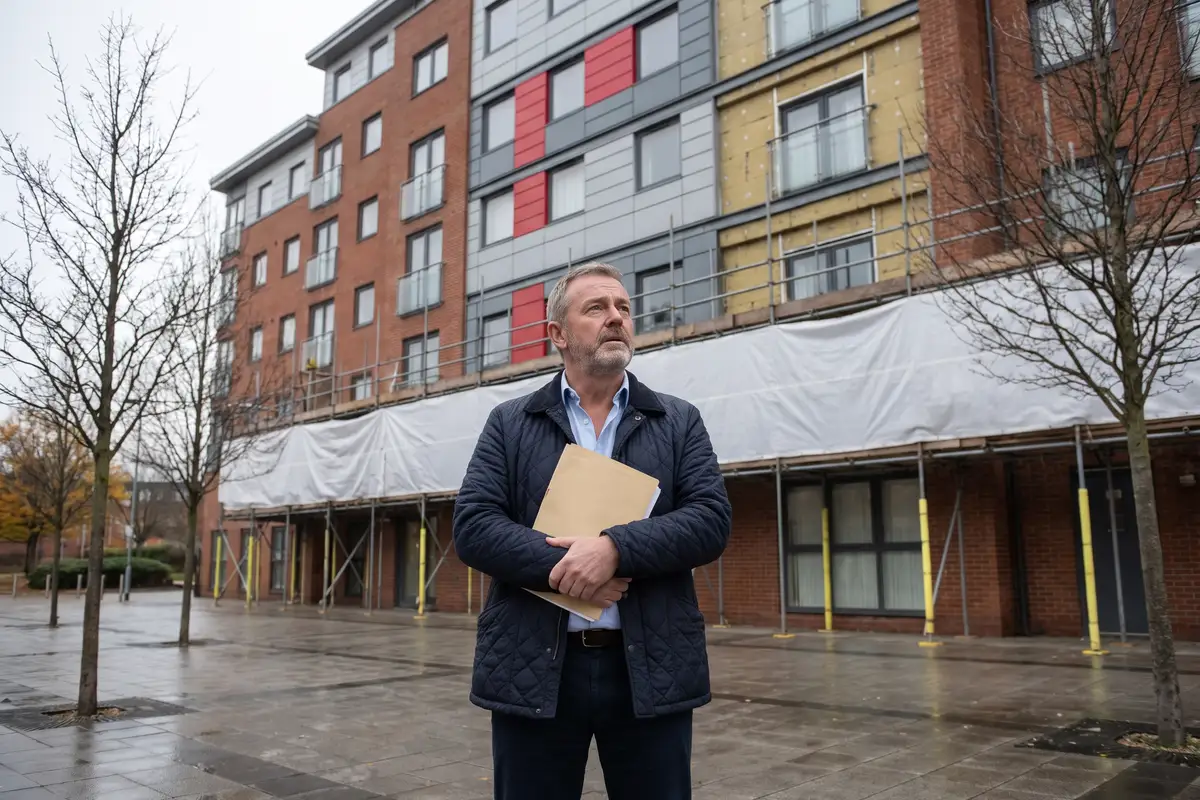
What Is a Non-Qualifying Lease?
The Building Safety Act 2022 protects most leaseholders in England from the cost of fixing historic fire safety problems in taller buildings. Whether those protections apply to your flat depends on a test of your lease on one date: 14 February 2022. A lease that passes is a qualifying lease. A lease that fails is not, and the difference can run to tens of thousands of pounds.
We hear most often from landlords who owned several rented-out flats on that date, and from people who later bought a flat from one of them. Both are selling a lease that does not qualify. Both find that a buyer, and a buyer's mortgage lender, treat the flat differently from one with a qualifying lease.

This guide is general information, not legal advice. It covers England: Wales has its own building safety law.
Written and kept up to date by the Sell Flat UK team at LDN Properties Ltd, who have bought leasehold flats since 2003. Last reviewed on 20 November 2026.
Does Your Lease Qualify? The Test
A lease is a qualifying lease if all of these apply:
- it was granted for more than 21 years and is a lease of a single flat, in a building in England that is at least 11 metres high or has at least five storeys
- the leaseholder pays a service charge
- it was granted before 14 February 2022, or it replaced a lease that qualified, for example when a lease was extended
- at the start of 14 February 2022, the flat was a leaseholder's only or main home, or a leaseholder owned no more than two other homes in the UK, so three in total including the flat
"Homes" means any home you own anywhere in the UK, freehold or leasehold: your own home, flats and houses you rent out and homes you own jointly with someone else. The test looks only at that one date. Buying or selling other property since then does not change the answer, and the status passes to whoever buys the flat.
The building's height is measured from the ground to the floor of the top storey, not to the roof. Our guide to EWS1 forms and cladding explains how the height and storey rules work.
Is your flat protected from fire safety repair costs?
Four questions to work through in order
-
Is the building in England, and at least 11 metres high or at least five storeys?
NoThe Act's protections do not applyWhat you pay for repairs depends on your lease, qualifying or not.
Yes
-
Is the freeholder the developer or linked to it, or has it failed to give you a valid landlord's certificate?
YesProtected, qualifying or notThe cost of fixing the defects cannot be charged through the service charge.
No
-
Was the lease granted before 14 February 2022, or does it replace a lease that qualified?
NoA non-qualifying leaseYou can be charged your share of the costs, with no cap.
Yes
-
On 14 February 2022, was the flat a leaseholder's main home, or did a leaseholder own no more than three UK homes in total?
YesA qualifying leaseCladding costs cannot be charged and other costs are capped. Complete the leaseholder deed of certificate.
No
A non-qualifying leaseYou can be charged your full share of repairs other than cladding, and of cladding work that no funding scheme or developer pays for.
If you own the flat jointly
The test looks at each leaseholder separately. A jointly owned lease qualifies if any one of the leaseholders met the test on 14 February 2022: either the flat was that person's main home, or that person owned no more than two other homes in the UK. Homes that a person owned jointly, or in part, with someone else count towards that person's total. What the owners held between them does not decide it.
One seller who contacted us owned her flat with a friend. Between them they owned several other properties on 14 February 2022, so she assumed the lease could not qualify. It may still qualify. If the flat was either owner's main home on that date, or either of them owned no more than two other homes in the UK, counting the ones they owned jointly, the lease passes the test. The deed of certificate names every leaseholder, and only one of them needs to sign it.
The government asked for views in March 2024 on whether to change the rules for jointly owned flats. We have not found a published decision as of November 2026.
If you own property through companies
The Act counts the homes that the leaseholder owns, and a company is a separate legal person from its directors and shareholders. So the answer depends on whose name the flat is in:
- If the flat is in your own name, the count is of the homes you owned yourself, alone or jointly. On the wording of the Act, homes that your companies own belong to the companies, not to you.
- If a company owns the flat, the count is of the homes that company owned. The main home part of the test cannot help, as a company does not live anywhere.
Another owner who contacted us held a portfolio of flats, some in his own name and some through several companies, and did not know where he stood. The answer turns on which name each flat is in, and on what that person or company owned on 14 February 2022. Neither the Act nor the government's guidance deals with companies directly, and we have not found a tribunal decision on the point. Take legal advice before you rely on this reading, and before you sign a deed of certificate.
If the lease was extended, replaced or bought since 2022
A lease that was extended or replaced after 14 February 2022 keeps the status of the lease it replaced, so a qualifying lease stays qualifying after an extension. A lease granted for the first time on or after that date does not qualify.
If you bought the flat after 14 February 2022, your lease has the status it had on that date. That depends on who owned it then, not on you. So someone who bought a flat as their only home from a landlord with several properties can still have a non-qualifying lease.
Questions to answer before you sell
These are the questions we ask a seller before we make an offer on a flat in a building of 11 metres or more. Your solicitor will need the same answers.
- Who owned the flat on 14 February 2022? If it was not you, when did you buy it?
- On that date, was the flat the only or main home of the owner, or of any joint owner?
- How many homes in the UK did each leaseholder own on that date? Include the flat, their own home, any homes rented out and any owned jointly, freehold or leasehold.
- Is the flat in your own name or a company's? If a company's, how many homes did that company own on that date?
- Have you completed a leaseholder deed of certificate, or has the freeholder or managing agent asked you for one?
- Has the freeholder provided a landlord's certificate? Is there an EWS1 form or a fire risk assessment for the building?
- Do you know of any cladding or fire safety problems, any repair work planned or under way, or any service charge demands for that work?
The government's online tool, Check if you'll have to pay to fix safety problems with your building, takes you through the main test. It asks for the price the flat last sold for before 14 February 2022, so have that to hand.
Why You Cannot Give a Buyer a Deed of Certificate
When the freeholder learns that a flat is to be sold, it must ask the leaseholder for a deed of certificate within five days. The leaseholder has at least eight weeks to provide it, and four more weeks if they ask. If no deed is provided, the lease is treated as not qualifying. So a lease that does qualify can be treated as not qualifying simply because the leaseholder did not reply.
A deed is a legal document, signed and witnessed. Do not sign one that says your lease qualifies if it does not: the freeholder, the buyer and the buyer's lender all rely on it. If you are unsure, ask your solicitor to go through the questions above with you before you sign anything.
The landlord's certificate matters just as much
The freeholder must also give you a landlord's certificate within four weeks of being told the flat is to be sold, or of you asking for one. Among other things, it must say whether the freeholder, or a company linked to it, was responsible for the defects.
If the freeholder does not provide a certificate that meets the rules, the law treats it as responsible for the defects. The cost of fixing them then cannot be charged through the service charge under any lease, qualifying or not. So ask for the landlord's certificate as soon as you decide to sell, and keep a record of the date you asked.
What Can You Be Charged With a Non-Qualifying Lease?
A qualifying lease is protected in three ways: cladding costs cannot be passed on, other repair costs are capped and legal fees about who is liable for the defects cannot be passed on. A non-qualifying lease has none of these protections. The table compares the two.
| Cost | Qualifying lease | Non-qualifying lease |
|---|---|---|
| Replacing unsafe cladding | Nothing | Your share, unless a government funding scheme or the developer pays |
| Other fire safety defects, such as missing fire-stopping, unsafe fire doors or combustible balconies | Up to £10,000, or £15,000 in London, for most flats | Your full share, with no cap |
| Temporary safety measures, such as a waking watch or a new fire alarm | Within the same cap | Your full share, with no cap |
| Legal and professional fees about who is liable for the defects | Nothing | Your share, if the lease allows it |
| Any of these, where the freeholder is the developer or linked to it | Nothing | Nothing |
The cap on a qualifying lease depends on the flat's value on 14 February 2022, worked out from the price it last sold for before that date. Below £175,000, or £325,000 in London, nothing can be charged. Up to £1 million the cap is £10,000, or £15,000 in London; up to £2 million it is £50,000; above that it is £100,000. No more than a tenth of the cap can be charged in any year.
The difference for fire safety repairs other than cladding
For most flats, a qualifying lease limits what the freeholder can charge. A non-qualifying lease does not.
Qualifying lease
A flat worth £175,000 to £1 million on 14 February 2022 (£325,000 to £1 million in London)
Capped
A limit set in law
£10,000 at most, or £15,000 in London
No more than a tenth of the cap can be charged in any year, so the cost is spread over at least ten years.
Flats worth less pay nothing; higher caps apply above £1 million.
Non-qualifying lease
The same flat, under a lease that does not qualify
No cap*
No limit set in law
Your full share, as the lease sets it
The same goes for temporary safety measures, such as a waking watch, and for legal fees about who is liable for the defects.
*Unless the freeholder is linked to the developer. The government plans to protect owners of four to six properties.
When Are You Still Protected?
A non-qualifying lease is not always exposed. Check each of these before you assume the worst:
- The freeholder is the developer, or linked to it. The cost of fixing the defects cannot then be charged through the service charge under any lease. The landlord's certificate says whether this applies.
- The freeholder has not provided a valid landlord's certificate. The law then treats it as responsible for the defects, with the same result.
- The developer has signed the government's remediation contract. Developers that signed it must fix life-critical fire safety defects, internal ones as well as cladding, in buildings of 11 metres or more in England that they built or refurbished in the 30 years before 5 April 2022. Leaseholders in those buildings, including non-qualifying ones, do not pay for that work. The government publishes a list of the developers that have signed.
- The cladding is in a government funding scheme. The Cladding Safety Scheme pays to fix unsafe cladding on eligible buildings of 11 metres or more. It does not pay for other defects, so a non-qualifying lease can still face those costs.
You can also apply to the First-tier Tribunal for a remediation contribution order. The tribunal can order the developer, or a company linked to the freeholder or the developer, to pay for the work. Any leaseholder in the building can apply, but it takes time and usually needs legal help.
Even without the protections, a service charge must be reasonable. If a bill looks too high, you can ask the First-tier Tribunal to decide whether it is payable and how much. Our guide to selling a flat with service charge arrears or a dispute explains how a dispute affects a sale.
What Is the Worst That Can Happen?
A large bill for internal fire safety work
Missing fire-stopping between flats, unsafe fire doors and combustible balconies are not cladding, so a non-qualifying lease has no cap on them. The bill is shared between the flats as each lease sets out. For illustration, £3.5 million of internal work shared equally between 80 flats is £43,750 for each flat. A qualifying flat in the same building, worth £300,000 outside London, would pay no more than £10,000, and no more than £1,000 in any year.
A cladding bill that nobody else pays
If the building is not in a government funding scheme and no developer is paying, each non-qualifying leaseholder can be charged their full share of the cost of replacing the cladding. Qualifying leaseholders in the same building cannot be charged for it.
Costs that keep coming while you wait
Until the work is finished, the building may need a waking watch or a new fire alarm. A non-qualifying lease pays its full share of these, with no cap and no end date. The buildings insurance often costs more too, and every leaseholder pays their share of that. If the flat is empty or between tenants, you pay all of it with no rent coming in.
A sale that falls through late
A buyer with a mortgage may agree a sale price and then find, weeks into the sale, that their lender will not lend because the lease does not qualify and no funding or developer contract covers the building. The sale falls through and you start again, often at a lower asking price. Our guide to what to do when a sale falls through covers the next steps.
A bill you cannot pay
If you cannot pay a large repair demand, the unpaid amount becomes service charge arrears. The freeholder can take you to court for it, and as a last resort unpaid service charges can put the lease itself at risk through forfeiture. Our guide to forfeiture explains the safeguards. The Commonhold and Leasehold Reform Bill, introduced in Parliament in November 2026, would replace forfeiture with a system run by the courts.
What Will Buyers and Lenders Do?
The largest mortgage lenders follow an industry statement on cladding. For a building of 11 metres or more, they will consider lending before the works are done if one of three things is in place: a developer contract to fix the building, a government funding scheme or a qualifying lease backed by a deed of certificate. A non-qualifying lease closes the third route. If neither of the other two applies, most buyers with a mortgage drop out. Our guide to selling a flat with cladding or fire safety works outstanding explains the three routes in detail.
Even where a lender will lend, the buyer takes on your status. A careful buyer, or their solicitor, will look at:
- the landlord's certificate, and whether the freeholder is linked to the developer
- the external wall report and the fire risk assessment
- what work is planned, what it will cost and the flat's share under the lease
- what the building already pays for temporary safety measures and insurance
- which costs a funding scheme or developer has agreed in writing to pay
The buyer will then allow for the costs they could face, and for the uncertainty. In our experience, a flat with a non-qualifying lease and fire safety work outstanding typically sells for about 25 to 40 percent less than it would without those problems. That is a typical range, not a valuation: it depends on the building, how far the works have got and who is paying for them.
Tell buyers about the status from the start. Their solicitor will ask about it, and a buyer who finds out late is more likely to reduce their offer or withdraw.
What Is Changing for Non-Qualifying Leaseholders?
The government announced the plans alongside the Building Safety (Remediation of Unsafe Cladding etc) Bill. That Bill was introduced in the House of Commons on 14 October 2026 and was at committee stage in November 2026. It would place a legal duty on those responsible to fix unsafe buildings, with fines of up to £500,000 for those who fail to act. Three of the plans matter to non-qualifying leaseholders:
- Owners of four to six properties. The government plans to raise the limit from three properties to six, so that more people who owned four to six properties on 14 February 2022 "will be protected from having these costs passed on to them". It has not said whether costs already paid would be refunded.
- People who bought since 2022. The government says it is "exploring how to narrow" the gap for people who bought a flat as their only or main home from an owner who did not qualify.
- Buildings the leaseholders own together. Where the leaseholders own the freehold together, the Act's protections do not cover them, as there is no separate freeholder. The government has promised new funding for high-risk internal fire safety defects in these buildings.
If you owned four to six properties on 14 February 2022, the change could make your lease qualifying, and that would make the flat easier to sell. If you do not need to sell soon, it may be worth waiting for the detail. If you owned more than six, nothing announced so far would change your position. We will update this guide as the Bill goes through Parliament.
How to Sell a Flat With a Non-Qualifying Lease
Why a traditional auction often works well
- The bidders are mostly cash buyers and investors. Many of them know buildings with fire safety problems and price the risk themselves, without a lender's approval.
- The legal pack sets everything out before the auction. Bidders can see the landlord's certificate, the external wall report, the works programme, any section 20 notices and the lease's status before they bid, so nothing comes to light late in the sale.
- The sale is binding when the hammer falls. The buyer pays a 10 percent deposit on the day and must complete within 28 days, so the sale does not depend on a mortgage lender.
- Competition can lift the sale price. Where several investors want the flat, bidding can go above the reserve.
Choose a traditional auction, not the Modern Method of Auction. Our guide to selling a flat at auction explains why.
What to watch out for at auction
An auction is not right for every seller. If bidding does not reach the reserve price, the flat does not sell. The auction house charges commission, and some also charge an entry fee. Your solicitor needs to have the legal pack ready a week or two before auction day. The sale price will reflect the risk that bidders see, so set a realistic reserve and talk it through with the auction house. The auction guide covers the formats, the costs and how to set the reserve.
Selling to a cash buying company
A cash buying company, such as Sell Flat UK, buys the flat itself, with no lender and no chain. It is usually the quickest route and needs no legal pack before an offer, but its offer reflects the risk it takes on, so it will be below what the flat would fetch without the problem. It suits sellers who need to sell quickly, or whose flat has already failed to sell.
Selling through an estate agent
An estate agent can market the flat, but many of the buyers who view will need a mortgage. Ask the estate agent to say from the start that the lease does not qualify and to look for cash buyers. That way you do not spend weeks on a buyer whose lender will turn the flat down.
Before you sell
- Check the status. Work through the questions above, or ask your solicitor to.
- Ask the freeholder for a landlord's certificate. The freeholder must provide it within four weeks of your request, and it shows whether the freeholder is linked to the developer.
- Gather the building's paperwork. The external wall report, the fire risk assessment, the works programme and any section 20 notices.
- Find out who is paying. Ask the managing agent for letters confirming any funding scheme or developer contract.
- Get your share in writing. Ask what the flat's share of each cost is under the lease, and what has already been billed.
- Compare the routes. Get an auction valuation, a cash offer and an estate agent's view, and compare what you would receive and how long each would take.
- Tell buyers early. Put the status and the paperwork in front of buyers before they make an offer.
Sources and Further Reading
- Building Safety Act 2022, section 119: the qualifying lease test and the date of 14 February 2022.
- Building Safety Act 2022, Schedule 8: what can and cannot be charged, and the caps.
- The Building Safety (Leaseholder Protections) (England) Regulations 2022: the landlord's certificate, regulation 6.
- The Building Safety (Leaseholder Protections) (Information etc.) (England) Regulations 2022: the leaseholder deed of certificate and its time limits, regulation 6.
- Gov.uk: remediation costs, what leaseholders do and do not have to pay: what a non-qualifying leaseholder can be charged.
- Gov.uk: leaseholder protections on building safety costs, frequently asked questions: the caps, and the protections passing to buyers.
- Gov.uk: deed of certificate, frequently asked questions: joint leaseholders and the eight-week time limit.
- Gov.uk: call for evidence on jointly owned properties (March 2024): how the test treats joint owners.
- Gov.uk: More people protected as government acts to make more homes safe (27 October 2026): the plans for owners of four to six properties.
- UK Parliament: Building Safety (Remediation of Unsafe Cladding etc) Bill: the Bill's progress.
- Gov.uk: developer remediation contract, resident factsheet: which buildings the contract covers and what leaseholders pay.
- UK Finance: industry statement on cladding: the three routes lenders use for buildings of 11 metres or more.
- Leasehold Advisory Service: protections if you do not qualify: free guidance for leaseholders.
Frequently Asked Questions
A non-qualifying leaseholder owns a flat whose lease fails the Building Safety Act test on 14 February 2022. The usual reason is that, on that date, the flat was not the owner's main home and the owner held more than three homes in the UK in total. The owner can then be charged their share of fire safety repairs with no cap, unless the freeholder is linked to the developer.
Check the position on 14 February 2022. The lease qualifies if it was granted for more than 21 years and before that date, in a building of at least 11 metres or five storeys. On that date, the flat must also have been a leaseholder's only or main home, or a leaseholder must have owned no more than three UK homes in total. The government's online tool takes you through the test, and your solicitor can confirm it.
You can, but the buyers will mostly be paying cash, as many mortgage lenders will lend only if a developer contract or a government funding scheme covers the building. A traditional auction often suits these flats, as bidders see the legal pack before they bid and price the risk themselves. A cash buying company is the quickest route.
The status stays with the lease, so a buyer takes on the same exposure to fire safety costs that you have. That is why buyers allow for the costs in their offer. The government said in October 2026 that it is exploring help for people who buy a flat as their home from an owner who did not qualify, but nothing has changed yet.
That depends on whether a developer contract or a government funding scheme covers the building. The largest lenders will consider lending on a flat in a building of 11 metres or more before the works if either is in place, even where the lease does not qualify. Without either, most lenders will decline, and the buyer will need to pay cash.
The test looks at each joint owner separately. A jointly owned lease qualifies if any one of the leaseholders met the test on 14 February 2022: the flat was that person's main home, or that person owned no more than two other UK homes, counting homes owned jointly. What the owners held between them does not decide it.
The Act counts the homes that the leaseholder owns. If the flat is in your own name, homes owned by your companies are, on the wording of the Act, owned by the companies, not by you. If a company owns the flat, the count is of that company's homes. The law does not deal with companies directly, so take legal advice on your own case.
The rules may change for some non-qualifying leaseholders. On 27 October 2026 the government said it plans to raise the limit from three properties to six, so that owners of four to six properties on 14 February 2022 are protected. It is also exploring help for people who later bought a flat as their home. Neither is law yet, and the details are not yet in a Bill.