
Process and Steps
What to Do When Your Flat Sale Falls Through
Around three in ten property sales in England and Wales collapse after an offer is accepted, and a fall-through rarely means the flat itself is unsaleable. This guide covers how to take stock, save the work that survives, and find the right route back to market.
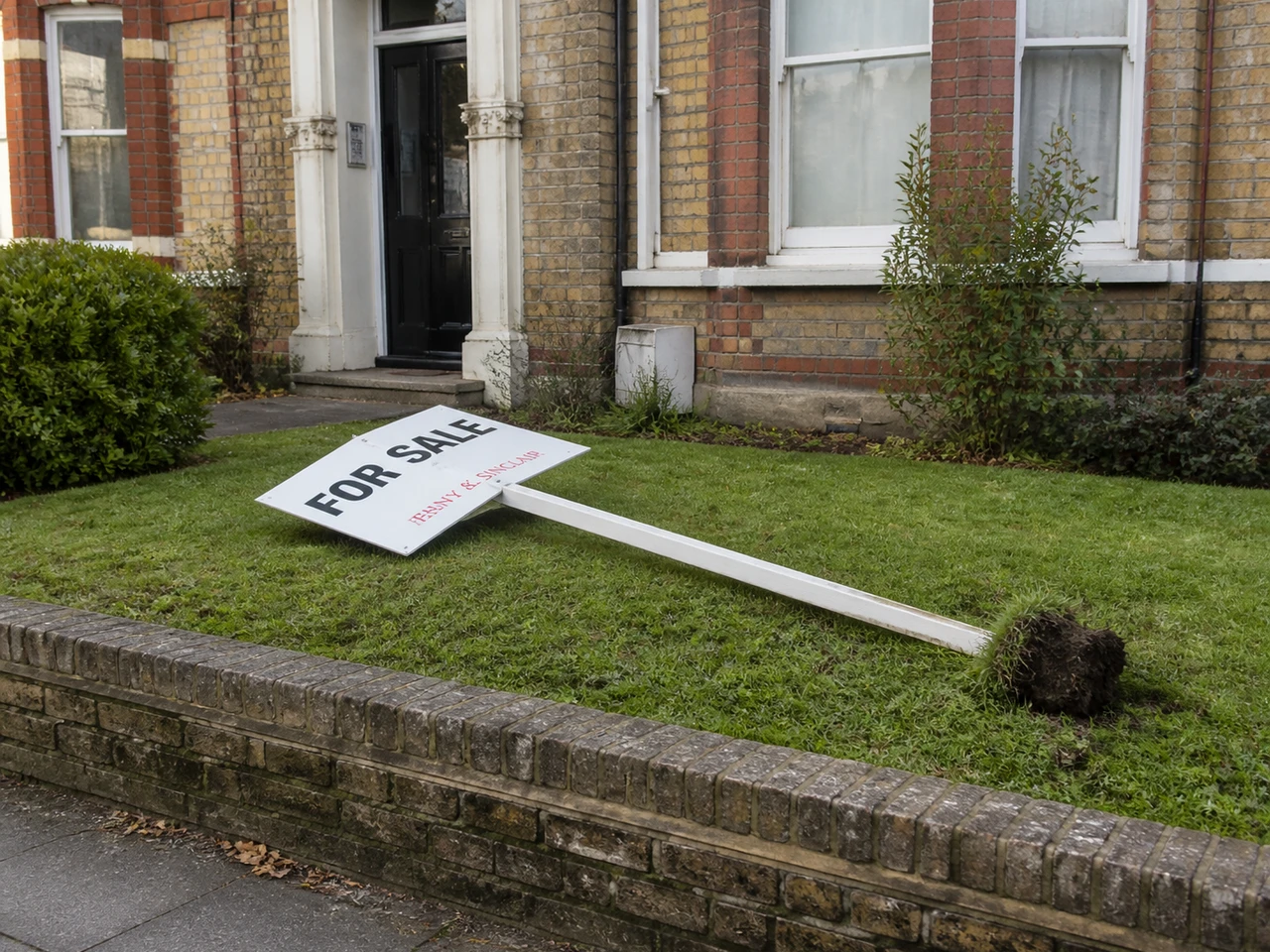
Why Flat Sales Fall Through, and How Often
Industry estimates put property fall-through rates in England and Wales at around 25 to 35 percent of agreed sales over 2023 to 2025, depending on market conditions. TwentyCi's quarterly Property and Homemover Report and NAEA Propertymark's monthly housing market reports have both published figures in this band. Roughly three in ten accepted offers do not result in a completed sale. A fallen-through sale is not unusual; it is part of how the system here works.
England and Wales
Around 3 in 10 agreed sales fall through before completion
Scotland (concluded missives)
Roughly 1 in 10 or fewer, because the contract becomes binding much earlier in the process
Two structural reasons explain the rate. First, the private treaty system used in England and Wales: the contract becomes binding only on exchange, which typically happens 6 to 12 weeks after the offer is accepted, with completion usually 2 to 4 weeks after that. During that gap, either side can walk away with no legal consequence. Second, leasehold flats specifically introduce extra points of failure: the management pack, EWS1 (External Wall System form) status, lease length, ground rent escalation, service charge accounts, freeholder relationship and any deed of variation all have to satisfy the buyer's solicitor. Each is a chance for something to surface that derails the sale. Leasehold flat sales fall through more often than freehold houses for that reason.
The picture is different in Scotland. The Scottish "concluded missives" model makes the contract binding once the buyer's and seller's solicitors have exchanged formal letters of acceptance, usually a few weeks after the offer and well before completion. Scottish fall-through rates are typically around 5 to 10 percent. Many other countries operate earlier-binding systems, with a notarial deposit or a binding offer at the time of acceptance. England and Wales sit at the high end of the international range, and the leasehold flat market sits at the high end of England and Wales.
Within the system here, fall-through reasons split into two groups. Buyer-side reasons include mortgage refused, the buyer's chain collapsing, gazundering at the last minute (a sudden demand to cut the agreed price just before exchange), or the buyer changing their mind for reasons unrelated to the flat. Flat-side reasons include a lease defect surfacing, an EWS1 concern, a survey finding, an unauthorised alteration, a service charge dispute, an onerous ground rent clause, or a freeholder issue. The distinction matters: the seller's response to each is completely different.

Find Out Exactly Why, and Take Stock
The first practical step after a fall-through is to find out the real reason from your agent and solicitor. The second is to resist the urge to make rash decisions in the first 48 hours.
Was it the flat, or was it the buyer?
This is the single most important question. The answer drives every decision that follows.
A buyer who changed their mind for unrelated reasons (a job loss, a relationship ending, a chain that collapsed elsewhere, a mortgage offer withdrawn for income or affordability reasons) is not the same as a buyer whose solicitor flagged a real lease defect or whose surveyor reported structural movement. With a buyer-specific fall-through, the flat is no different from how it was the day before. With a flat-specific fall-through, the same issue will surface with the next buyer's solicitor unless something changes.
Buyer-side reasons
The buyer's world changed, not your flat
- Mortgage refused or withdrawn
- Their chain collapsed elsewhere
- A gazundering attempt you refused
- A change in their circumstances
The flat is unchanged: relist with confidence
Flat-specific reasons
Something about the flat itself surfaced
- Lease defect or short lease
- EWS1 or building safety concern
- Survey finding or unauthorised alterations
- Service charge or freeholder dispute
The same issue will recur: fix or disclose before relisting
Don't make rash decisions in the first 48 hours
A sale collapse is stressful, and the temptation is to do something immediately: change the price, switch agents, accept any offer that lands. None of this helps in the first day or two. A pause of 48 to 72 hours to find out the real reason and think clearly is time well spent. The decisions taken in that pause shape weeks of activity that follow.
The sale collapses; resist immediate decisions
Find out the real reason from the agent and solicitor; take stock
Confirm what survives on the file and the re-marketing terms
Fix or disclose anything flat-specific that surfaced
Route chosen; the relist, auction entry or cash-buyer offer is under way
Speak to Your Solicitor and Agent Within the First 48 Hours
Two practical conversations to have early. Both are about preserving momentum and the work already done.
With the agent
Confirm the re-marketing terms in your contract. Most sole-agency agreements include an automatic re-marketing period, often the remainder of the original term plus a continued obligation, so the agent has an incentive to find a new buyer quickly without a fresh instruction. Get the agent's honest read on what went wrong: was the price ambitious; did the buyer's circumstances look fragile from the start; was there an issue in the management pack the agent could see coming. Confirm the listing strategy for the relist: same photos, same description, same asking price (for now), and any disclosure adjustments needed.
With the solicitor
Ask for a written summary of what work has been completed, what is still in progress, and what survives if the matter restarts with a different buyer. Confirm the current state of the contract pack, the management pack, the searches, and the buyer's enquiries already answered. Ask which costs you have already paid for and which will need to be repeated for the next buyer. The relationship and momentum with the existing solicitor are usually worth keeping; switching firms after a fall-through restarts the file-opening work and rarely speeds anything up. A separate guide on this site covers how to choose a conveyancing solicitor if you do decide to switch.
Address Any Issues That Surfaced
If the cause was flat-specific, the same issue will surface with the next buyer's solicitor. Fix what is fixable before relisting.
Lease length issues
If the previous sale fell through because the lease was too short for the buyer's lender (commonly under 80 years, sometimes under 70 or 75), the same issue will affect any mortgage-dependent buyer. Two routes: extend the lease before relisting (typically takes 6 to 12 months but often adds significant value) or accept that the buyer pool narrows to cash buyers and investors. The 31 January 2025 abolition of the two-year qualifying period under the Leasehold and Freehold Reform Act 2024 (LAFRA) means an extension can now be started immediately rather than after a wait.
Building safety and EWS1
If the buyer's lender refused on cladding or EWS1 grounds, the same will happen with most mainstream lenders. Specialist lenders exist but the buyer pool narrows. If the building has not yet had an EWS1 assessment, ask the freeholder or managing agent whether one is in progress; if there is a leaseholder deed of certificate or a landlord's certificate available under the Building Safety Act 2022, get a copy.
Unauthorised alterations or missing certificates
If the buyer's solicitor flagged unauthorised alterations or missing FENSA (window installation), Gas Safe or electrical certificates, sort them now. Indemnity insurance can cover some gaps for £30 to £200, but obtaining the original certificate is cleaner where possible. For alterations that required the freeholder's licence to alter and did not have one, regularising the position now (or accepting an indemnity policy) prevents the same enquiry stalling the next sale.
Service charge or freeholder dispute
Live disputes scare buyers. If a dispute can be settled or paused, do so. If it is genuinely intractable, disclose it upfront in the new listing; buyers' solicitors will find it in the management pack regardless.
Survey findings
If a buyer's survey came in significantly low or flagged structural issues (damp, settlement, roof, escape of water history), get your own pre-listing survey or address the specific findings. The next buyer's surveyor will likely flag the same things, and pre-empting them with documented remediation is the cleaner answer.
What You Can Reuse from the Previous Attempt
A surprising amount of the work survives a fall-through. Knowing what carries over saves real time and money on the relist.
Always reusable
The lease and the title are already with your solicitor and do not need to be reordered. The TA6 (Property Information) and TA7 (Leasehold Information) forms can be refreshed and re-signed for the new buyer. The EPC (Energy Performance Certificate) remains valid for 10 years from issue. The contract pack drafted by your solicitor is reusable with minor amendments for the new buyer.
Reusable within a defined window
Property searches (local authority, environmental, water and drainage) are paid for by the buyer on each transaction, not the seller. They are typically valid for around 3 to 6 months for most lenders. If your previous sale was close to exchange when it failed, the previous buyer's searches may still be in date. Solicitors sometimes arrange for the next buyer to acquire them from the previous buyer's firm at a reduced price; this keeps the relist conveyancing moving and saves the next buyer the cost of fresh searches. Worth flagging to the next buyer's solicitor if relevant.
The leasehold management pack is treated as current by managing agents for around 3 to 6 months from issue. After that, a refresh fee typically applies, often a fraction of the original cost. If your previous sale was lengthy and the pack is approaching the end of its window, expect a refresh fee in the relist budget.
Has to be redone
Buyer-specific items have to start again with the new buyer: identity and AML (anti-money-laundering) checks, the new buyer's solicitor's enquiries, the new buyer's mortgage offer and survey. Anything that has changed in the building since the previous sale also has to be re-examined: a new Section 20 notice issued (the consultation notice for major works), a change of managing agent, a recent insurance claim, a new fire safety report.
Always reusable
- Lease and title, already on file
- EPC (valid 10 years)
- TA6 and TA7 forms, refreshed and re-signed
- Contract pack draft and the solicitor's file knowledge
Reusable within a window
- Searches: typically 3 to 6 months for most lenders
- Management pack: typically 3 to 6 months, then a refresh fee
Has to be redone
- New buyer's ID and AML checks
- New buyer's enquiries, mortgage offer and survey
- Anything changed in the building since the last sale
Choose Your Route: Relist, Auction or Cash Buyer
Three routes are available. The right one depends on why the previous sale failed and what you most need now.
Think carefully before reducing the asking price
Estate agents very often suggest a price reduction after a fall-through. The reasoning is reasonable from the agent's perspective: a lower headline price moves the flat faster, reduces their unbilled time, and increases the chance of completion within the original instruction period. That is fine for the agent; it is not always right for the seller.
If the previous buyer pulled out for reasons unrelated to price (financing collapsed, chain failed, change of circumstances), reducing the price addresses a problem that did not exist. The next buyer might pay the original asking price without difficulty, and a price drop simply transfers value to that buyer for no reason.
Reduce the price only when the previous buyer's evidence suggests price genuinely was the issue: offers withdrawn after a survey came in significantly low, repeated low-ball renegotiations from the start, or a measurable shift in comparable sales since the original listing. Reflect first; reduce only after a real reason exists.
Open market: same agent or new?
Relist on the open market when the cause was buyer-specific and the flat itself is unchanged. Sticking with the same agent is usually right if they communicated well and found the original buyer at a sensible price. Switching agents is justified if the first agent oversold the price, missed warning signs about the buyer's circumstances, or communication was poor. Most agency contracts include a notice period for switching; check the wording before instructing a new firm.
Traditional unconditional auction
Auction is a strong route after a fall-through, particularly where flat-specific issues surfaced. The contract binds at the fall of the hammer with completion fixed at 28 days; auction buyers price in known issues with full information from the legal pack. Mortgage-dependent buyers who pulled out the first time round are unlikely to be the auction buyer the second time round, but specialist investors and cash buyers fill that gap.
The Modern Method of Auction (MMoA), also called conditional auction, is structurally different and we recommend approaching it with caution. Despite the name, an MMoA sale is not legally binding at the fall of the hammer: the buyer pays a non-refundable reservation fee, but exchange happens later (typically within 28 to 56 days), with conditions attached. The certainty advantage of an unconditional auction does not hold in the same way. After a fall-through the seller is usually looking for certainty, not a second potential collapse.
Direct sale to a cash buyer
The fastest and most certain route. Offers in days, completion typically within 3 to 6 weeks, no chain, no public viewings. The price is below open-market value (commonly 70 to 85 percent) in exchange for speed and certainty. Especially relevant if the previous fall-through has put the seller under time pressure: an onward purchase falling out of step, mortgage costs piling up, council tax on an empty flat. Even if you do not take the cash buyer route, the figure works as a benchmark; it tells you the floor below which you would not accept an open-market negotiation.
How to choose
For a buyer-specific fall-through where the flat is unchanged and there is no time pressure, relisting on the open market with the same agent at the same price is usually the right call. For a flat-specific fall-through with a fixable issue, fix it and then relist. For a flat-specific fall-through where the issue is hard to fix (short lease, EWS1, structural), or where the buyer pool has narrowed, auction is often the cleaner route. Where time pressure is real, get a cash buyer offer and weigh it objectively against the open-market timeline.
Relist on the open market
Pick this when the cause was buyer-specific and time pressure is low.
- Full open-market value stays in reach
- Same timeline and the same fall-through risk as before
Unconditional auction
Pick this when a flat-specific issue surfaced and certainty matters.
- Binding on the hammer; completion fixed at 28 days
- Issues priced in via the legal pack
- Typically 10 to 20 percent below open-market value
Direct sale to a cash buyer
Pick this when time pressure is real.
- Offer in days, completion in 3 to 6 weeks
- No chain, no public viewings
- Commonly 70 to 85 percent of open-market value
Be Honest in the New Listing
Disclosure rules have hardened in recent years. Hiding flat-specific issues is no longer practical even where it might once have been.
Under the Digital Markets, Competition and Consumers Act 2024 (DMCC), in force for property listings since 6 April 2025, estate agents and auctioneers have a duty to disclose material information about the flat in the listing itself, not just in later conveyancing. The Competition and Markets Authority enforces; serious breaches can be criminal.
The Act does not specifically require sellers to disclose that a previous sale fell through. What it does require is disclosure of any material flat-specific issue, anything a reasonable buyer would weigh in their decision. If your previous sale fell through because of such an issue (a lease defect, an EWS1 concern, a service charge dispute, an unauthorised alteration, a survey finding), that issue is now squarely material and must appear in the listing or on the TA6 and TA7 forms. The previous failure itself is not strictly required to be disclosed under DMCC, but the underlying cause is.
Hiding a known material issue carries two layers of exposure. Under DMCC, the agent faces enforcement action. Under the Misrepresentation Act 1967 and the TA forms signed during conveyancing, the buyer has a parallel right to claim damages from the seller, or rescind the contract, for inaccurate or misleading answers.
The practical reality reinforces the rule. Buyers can see portal listing history (Rightmove and Zoopla show when a property was listed, relisted or reduced), and buyers' solicitors routinely ask, in their initial enquiries, whether a previous sale fell through and why. A relisted property is not invisible, and concealment surfaces quickly. Honest framing of why the previous sale did not complete is far better than the buyer discovering it themselves in week eight of conveyancing.
The Financial Side: What's Lost, What's Recoverable
A fall-through has a real cost. Knowing what is sunk and what can be salvaged sets expectations honestly.
What is lost
Legal fees on completed work are not recoverable. Your solicitor has done lease review, drafted the contract pack, answered enquiries and dealt with the management pack; most of this is billed and stays billed. Disbursements you have paid are also gone: the management pack (£200 to £600), the EPC if you ordered one (£50 to £100), any indemnity insurance (£30 to £200), bank transfer fees on the abandoned exchange, and Land Registry copies. Council tax, mortgage interest and the time the flat has been off the market for the agreed sale add to the total.
What can sometimes be partially recovered
Pro-rated agent fees can apply if your contract is on a no-sale-no-fee basis (no fee is payable for the failed sale) or on payment-on-exchange terms (no fee is payable until exchange happens). Check the wording of your agency contract before assuming the worst.
The management pack is usually refreshable rather than wholly re-ordered; managing agents typically charge a fraction of the original cost to update the pack within their validity window.
In very rare situations, if the previous buyer exchanged contracts but then failed to complete, their exchange deposit is forfeit and goes to the seller. Most fall-throughs happen before exchange, so this does not apply in most cases.
How to limit further loss
Take a moment to understand what has happened, but don't take too long getting the flat back on the market. Every week off the market means more council tax, more mortgage interest and more time on hold. A focused first week (find out why, take stock, speak to your team, decide the route) gets the relist away faster than waiting two or three weeks before deciding anything.
Preserve what survives. The work and documents already completed are your biggest asset on the relist; using them properly saves both money and time.
Consider all three routes objectively. A cash buyer offer at 80 percent of open-market value, completing in 6 weeks, can net more than another four months on the market followed by a possible second fall-through.
A Note on Legislation in Motion
Four regulatory threads worth knowing if your relist runs through 2026 or beyond. This guide is general information, not legal advice.
The Digital Markets, Competition and Consumers Act 2024 (DMCC) has been in force for property listings since 6 April 2025. It gives the CMA direct enforcement powers against agents and auctioneers who fail to disclose material information in the listing. After a fall-through, this means flat-specific issues that surfaced first time round are now harder to hide on the relist. Agents are erring on the side of more disclosure, and sellers are being asked more questions before a listing goes live.
The Leasehold and Freehold Reform Act 2024 (LAFRA) is partly in force. The two-year qualifying period for statutory lease extension was abolished on 31 January 2025, so a seller whose previous sale collapsed because of a short lease can extend immediately rather than wait. Pending provisions on marriage value and the valuation method are still not in force: the High Court dismissed a freeholders' challenge in October 2025, but an appeal is now before the Court of Appeal and no commencement date has been set. If the previous sale fell through because of lease length, that timetable affects the cost-benefit of extending before the relist.
The Building Safety Act 2022 (BSA) has added a layer of building safety enquiries to every leasehold conveyance: cladding height, EWS1 status, the leaseholder deed of certificate and the landlord's certificate for buildings with relevant safety defects. Issues that previously surfaced late in conveyancing now often surface earlier, which helps sellers who address them and exposes sellers who try to ignore them.
The Renters' Rights Act 2025 (Section 21 abolished on 1 May 2026, with Ground 1A available for landlords selling) matters where the flat is tenanted and the previous buyer was an owner-occupier. Practice and guidance are still settling; take current legal advice if your sale fell through because the tenant's position derailed it.
Frequently Asked Questions
Industry data from TwentyCi's quarterly Property and Homemover Report and NAEA Propertymark's monthly housing market reports puts fall-through rates for property sales in England and Wales at around 25 to 35 percent of agreed sales over 2023 to 2025, depending on market conditions. Leasehold flat sales fall through more often than freehold houses because the management pack, EWS1 status, lease length, service charge accounts and freeholder relationship all introduce extra points where things can break down. By comparison, in Scotland, where "concluded missives" make the contract binding much earlier in the process, fall-through rates are typically around 5 to 10 percent.
Same day, in principle. The contract pack, lease, title and management pack your solicitor already holds remain valid. Practically, taking 48 to 72 hours to find out exactly why the sale fell through, and decide whether the same route is still the right one, is time well spent. A sale that collapsed for a flat-specific reason will collapse again with the next buyer unless the underlying issue is addressed first.
Either is reasonable. If your previous agent communicated well, found a buyer at a sensible price, and the sale fell through for reasons outside their control, sticking with them saves time and the cost of a new instruction. If you felt the agent oversold the price, missed warning signs about the buyer's circumstances, or communication was poor, switching is justified. Many agency contracts include a re-marketing clause that auto-extends the agreement for a defined period after a fall-through, so check yours before deciding.
Sticking with the same solicitor is usually right after a fall-through. They already hold the lease, title, contract pack and management pack, and have done the file-opening work (ID, AML, instructions). Switching now means repeating most of that, which delays the relist and adds cost. Switching is justified if the original firm caused the failure (slow responses, missed enquiries, errors that lost the buyer), but that is rarer than sellers think.
No. Searches are paid for by the buyer on each transaction, not the seller, so fresh searches for the next buyer are not your cost. Property searches (local authority, environmental, water and drainage) are typically valid for around 3 to 6 months for most lenders. If your previous sale was close to exchange when it collapsed, the previous buyer's searches may still be in date. Solicitors sometimes arrange for the next buyer to acquire them from the previous buyer's firm at a reduced price, which keeps the relist conveyancing moving and saves the next buyer the cost of fresh searches. Worth flagging to the next buyer's solicitor if relevant.
Most managing agents treat their pack as current for around 3 to 6 months from the issue date. After that they typically charge a refresh fee (often a fraction of the original cost) to update it for the new buyer. If your previous sale was lengthy and the pack is approaching the end of its window, expect a refresh fee in the relist budget.
Not automatically. Estate agents often suggest a price reduction after a fall-through because a lower headline price moves the flat faster and reduces their unbilled time. That is fine for the agent; it is not always right for the seller. If the previous buyer pulled out for reasons unrelated to price (financing fell through, chain collapsed, change of circumstances), reducing the price addresses a problem that did not exist. Reduce the price only when the previous buyer's evidence (offers withdrawn after a survey came in low, repeated low-ball negotiation, or a measurable shift in comparable sales) suggests price genuinely was the issue.
It depends on why the previous sale fell through. Under the Digital Markets, Competition and Consumers Act 2024 (DMCC), the estate agent must include material information about the flat in the listing itself, and the seller must answer the TA6 and TA7 forms accurately. If the previous sale fell through because of a flat-specific issue (a lease defect, EWS1 concern, service charge dispute, unauthorised alterations, survey finding), that underlying issue is material and must be disclosed in the new listing or on the TA6 and TA7 forms. The fact of the previous failure itself is not strictly required to be disclosed under DMCC, but buyers can see portal listing history and their solicitors routinely ask, so concealment usually surfaces. Honest framing of why the previous sale did not complete is far better than the buyer discovering it themselves.
Most of what you paid is sunk. Legal fees on completed work (lease review, contract drafting, enquiry responses) are not recoverable. The management pack, EPC and any indemnity insurance are paid for and cannot be returned. Some costs may be partially recoverable: pro-rated agent fees in some contracts, a managing-agent pack refresh at a reduced fee, and (rarely) the previous buyer's deposit if the contract had exchanged before the failure. Speed of the relist is what limits further losses such as council tax and mortgage interest.
Often yes, especially if the previous sale fell through because of a flat-specific issue or you are now under time pressure. A specialist cash buyer prices in the underlying issues with full information, completes typically in 3 to 6 weeks, removes chain risk and avoids viewings. The price is below open-market value (commonly 70 to 85 percent) but a real number you can act on. Even if you do not take the cash buyer route, the figure works as a benchmark: it tells you the floor below which you would not accept an open-market negotiation.