
Sellers' Guide
Selling a Flat Above a Shop or Commercial Premises
Many mortgage lenders limit lending on flats above shops, cafés, takeaways and offices, so these flats can be harder to sell. This guide explains which businesses worry lenders and which do not. It also covers the leasehold issues in buildings with a business below, how much less these flats typically sell for and your options for selling.
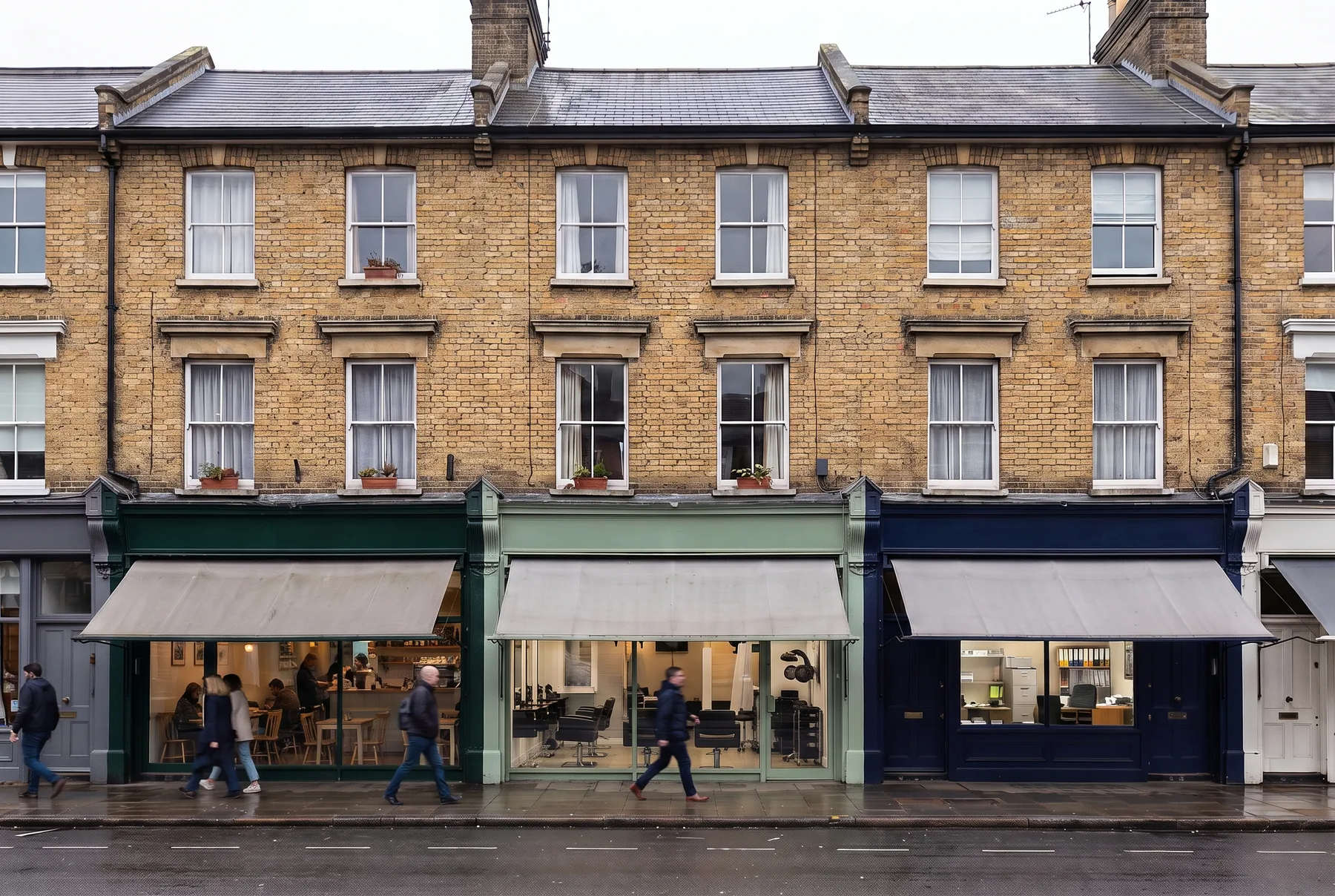
Can You Sell a Flat Above a Shop?
Flats above shops are everywhere in Britain's towns and cities. Whole high streets are made up of them, often in handsome Victorian parades, and for many first-time buyers they are the most affordable way to live somewhere central. They make good homes. They are just harder to sell than an otherwise similar flat in a purely residential block.
The reason is almost always the mortgage. A buyer who needs a loan has to find a lender willing to lend on the flat, and many high-street lenders restrict flats above commercial premises or refuse some of them outright. Fewer buyers means a longer wait and a lower price.
How much this matters depends heavily on what is below you. A flat above an accountant's office is a very different proposition from one above a kebab shop open until 2am. This guide explains the difference, the leasehold issues that come with mixed-use buildings, and the routes to a sale.

This guide is general information, not legal or financial advice. It covers England and Wales.
Written and kept up to date by the Sell Flat UK team at LDN Properties Ltd, who have bought flats above shops, cafés and takeaways since 2003. Last reviewed on 9 October 2026.
Why Lenders Are Cautious
A mortgage lender has to be confident it can sell the flat if the borrower stops paying. A business underneath adds risks a purely residential block does not have: noise late at night, cooking smells, a higher risk of fire, people coming and going, and the chance that a quiet shop becomes a busy takeaway in a few years' time. Each lender sets its own rules, and they vary a lot.
Businesses that worry lenders least
- offices, such as an accountant, estate agent or solicitor;
- hairdressers, beauty salons and other appointment-based businesses;
- quiet daytime shops, such as clothes shops, bookshops or a pharmacy.
Businesses that worry lenders most
- takeaways and fast-food shops, because of smells, extraction ducts, late hours and fire risk;
- restaurants, pubs and bars, for noise and late-night opening;
- launderettes and dry cleaners, for heat, moisture and the chemicals used;
- anything open late or with a fryer or open flame in the kitchen.
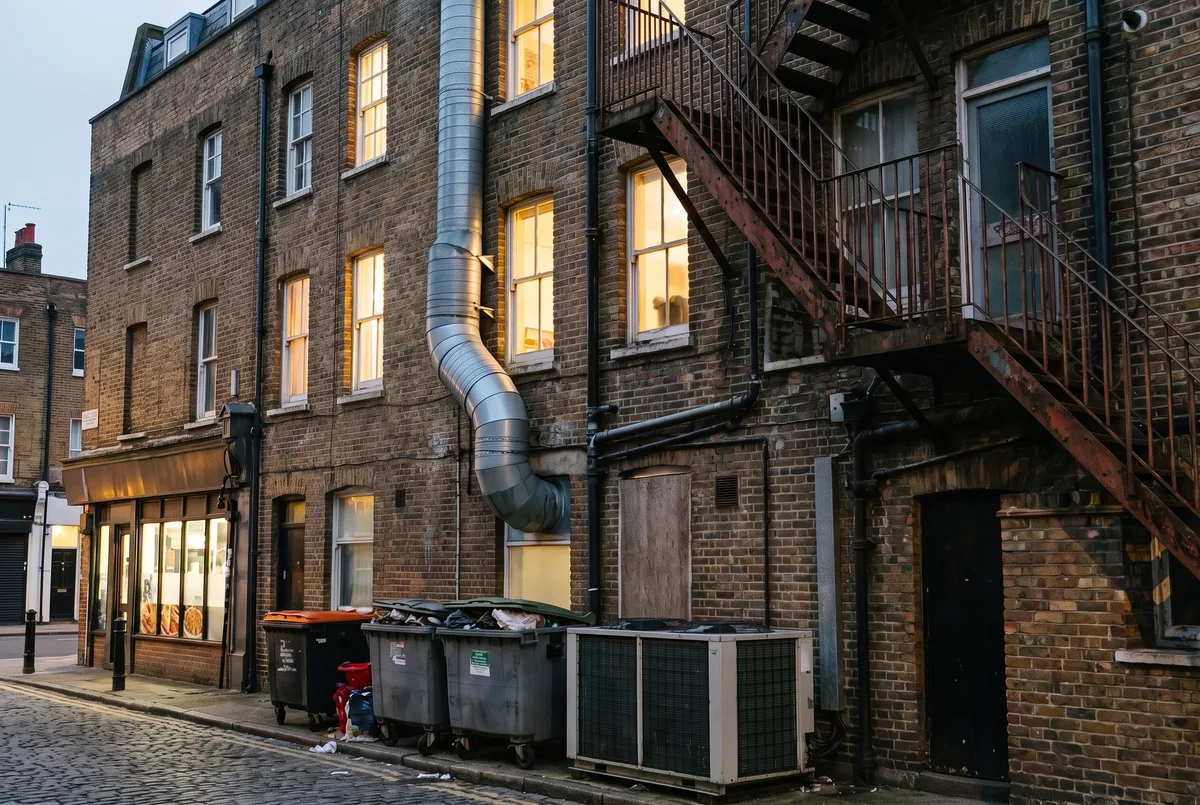
The other things lenders check
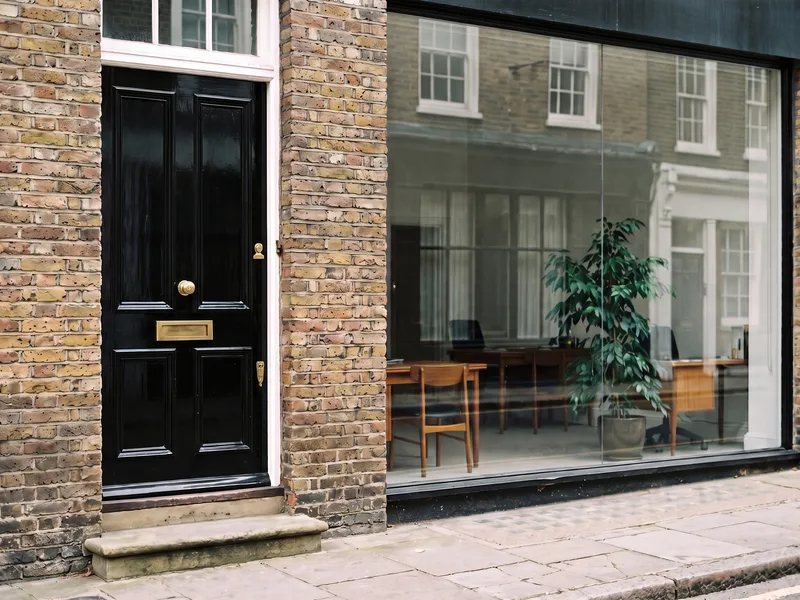
Access. Lenders strongly prefer a flat with its own front door from the street or a shared residential hallway. Access through the shop, or across the shop's yard, is a frequent reason for refusal.
How much of the building is commercial. Some lenders set a limit on the share of the building used for business, or treat the whole building as commercial if the business part is large.
Loan size. A lender that does accept the flat may lend less, for example capping the mortgage at 75 percent of the value, so the buyer needs a bigger deposit. That alone rules out many first-time buyers.
Lenders differ, so a flat that one buyer's lender rejects may be fine for another. A mortgage broker who knows the specialist lenders is often the difference between a sale that works and one that falls through.
The Effect on Price
There is no official figure for how much less a flat above commercial premises sells for. The ranges below are typical from our experience of buying these flats. The type of business below matters most, followed by access, how much of the building is commercial, the lease and the local market.
| What is below the flat | Typical discount | Why |
|---|---|---|
| Office, salon or quiet daytime shop, with a separate entrance | Little or none, up to about 10 percent | Many lenders accept these flats, so most buyers can proceed |
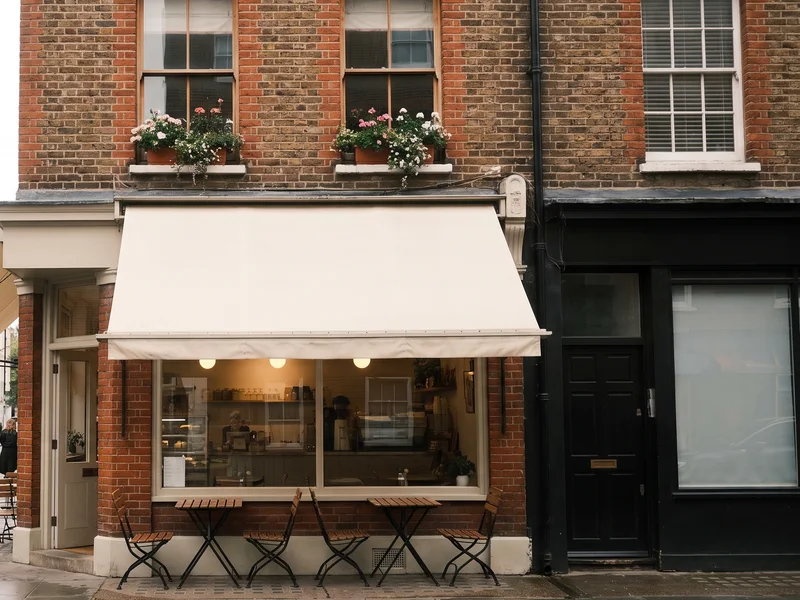
| General retail or a café with normal opening hours | About 10 to 20 percent | Some lenders decline or lend less, so the buyer pool narrows |
| Takeaway, restaurant, pub, bar or launderette | About 20 to 30 percent, sometimes more | Most high-street lenders decline, so buyers are mainly cash buyers and investors |
These are starting points, not a valuation. A local estate agent who knows the parade, and what similar flats above it have sold for, will give you a better figure for your own flat. Our guide to valuing a leasehold flat covers the other factors that move the price.
The Leasehold Issues in a Mixed-Use Building
A building with a shop and flats is usually owned by one freeholder, who lets the shop on a commercial lease and the flats on long residential leases. That arrangement brings a few issues a buyer's solicitor will ask about.
Buildings insurance
Insuring a building with a business in it usually costs more, especially above a takeaway or restaurant, because of the fire risk. Check how your lease splits the premium between the shop and the flats. If the flats are paying for the shop's higher risk, a buyer will notice. Our guide to buildings insurance for leasehold flats explains how block policies work.
Service charges
The service charge should be shared fairly between the shop and the flats. The shop may pay for the roof and structure but not for a residential hallway it never uses, or the reverse. Guidance from the Royal Institution of Chartered Surveyors says shared costs should reflect who uses and benefits from each service. Our guide to service charges covers how to check and challenge them.
Fire separation
Building regulations require fire separation between a business and the homes above it, and a buyer's surveyor may ask how it was achieved, particularly in an older conversion. A fire risk assessment for the shared parts, if the building has one, is worth having to hand.
A change of business below
A quiet shop can become a takeaway. Many changes of use need planning permission, but some do not, and a buyer cannot know what the next business will be. Buyers' solicitors often check the planning history of the shop, and a lender may decide on the flat's suitability as things stand on the day.
Your Rights in a Mixed-Use Building
Living above a shop changes some of your rights as a leaseholder, and not others.
- Extending your lease: unaffected. The right to a 90-year lease extension under the Leasehold Reform, Housing and Urban Development Act 1993 applies to a qualifying flat whatever is downstairs. Our guide on how to extend your lease explains the process.
- Buying the freehold with your neighbours: often blocked. Collective enfranchisement is not available if more than 25 percent of the building's internal floor space, excluding common parts, is used for non-residential purposes. Many buildings with a shop on the ground floor exceed that. The Leasehold and Freehold Reform Act 2024 will raise the limit to 50 percent, but that change is not yet in force. Our guide to collective enfranchisement covers the other qualifying rules.
- Right to Manage: now more widely available. Since 3 March 2025, a building can qualify for the Right to Manage with up to 50 percent non-residential floor space, up from 25 percent. That lets the flat owners take over the running of the building even where they cannot buy the freehold. Our guide to the Right to Manage explains how.
How to Prepare the Sale
Most sales of flats above shops that fall through do so because the buyer's lender declines after the buyer has already spent money on a survey and searches. Preparing well cuts that risk.
- Find out exactly what is below you. The type of business, its opening hours and whether it cooks on site. Buyers and lenders will ask.
- Gather the building paperwork. The buildings insurance schedule, the last three years of service charge accounts, any fire risk assessment, and the planning history of the shop if you can get it.
- Tell your estate agent everything. The business below is material information that must appear in the listing, and an agent who knows can look for cash buyers and buyers with a specialist lender from the start.
- Ask buyers how they are funding the purchase. Before accepting an offer, ask whether a mortgage broker has confirmed the lender will accept a flat above this type of business.
- Price realistically. Base the asking price on what similar flats above similar businesses have sold for, not on flats in purely residential blocks nearby. Our guide to pricing mistakes explains why overpricing costs more in the end.
The Routes to a Sale
The best route depends mainly on one question: can a buyer with an ordinary mortgage buy your flat? If so, an estate agency sale usually gets the best price. If not, the other routes come into their own.
| Route | Typical time | Price | Best for |
|---|---|---|---|
| Estate agent | 8 to 14 weeks from offer to completion, after marketing | The best achievable, if buyers can get a mortgage | Flats above offices, salons and quiet shops |
| Traditional auction | Completion within 28 days of the auction | Often 10 to 25 percent below market value | Flats where competition between investors may lift the price |
| Cash buyer | As little as 3 to 4 weeks | Usually 15 to 30 percent below market value | Flats above takeaways and pubs, or sellers who need certainty |
If your flat is above a quiet business with its own entrance, an estate agency sale will usually leave you with the most money. If it is above a takeaway or pub and a sale has already fallen through on the mortgage, an auction or a cash buyer removes the lender from the equation. Our guides to selling at auction and selling to a cash buyer go through the trade-offs, and our guide to the cost of selling a leasehold flat shows what each route costs in fees.
What to Do, and What Not to Do
Do:
- Lead with the positives. Central location, period features and good transport links sell flats above shops. A separate front door is worth mentioning early.
- Check the lease and the insurance split before you go to market. A fair split of costs with the shop is a selling point; an unfair one is better found by you than by the buyer. Our guide to defective leases covers lease problems that can stop a mortgage.
- Ask about the buyer's lender before you accept an offer. It is the single most common reason these sales fail.
Do not:
- Do not play down what is below. The buyer's survey and solicitor will find out, and a late surprise loses the buyer.
- Do not price against purely residential flats. It wastes weeks on the market and usually ends in a bigger reduction later.
- Do not assume one lender's refusal is final. Lenders' rules differ, and a specialist broker may find one that will lend.
Sources and Further Reading
- Leasehold Reform, Housing and Urban Development Act 1993, section 4: the 25 percent non-residential limit for collective enfranchisement.
- Commonhold and Leasehold Reform Act 2002, Schedule 6: premises excluded from the Right to Manage, as amended from 3 March 2025.
- HomeOwners Alliance: buying a flat above a shop, for the buyer's side of the same questions.
- UK Finance Mortgage Lenders' Handbook, where conveyancers check each lender's requirements.
Frequently Asked Questions
Often, yes, but not from every lender. Many high-street lenders restrict or decline flats above commercial premises, especially above takeaways, restaurants, pubs and launderettes. Flats above offices, salons and quiet shops with their own front door are accepted by more lenders. A lender that accepts the flat may cap the loan, for example at 75 percent of the value. A mortgage broker who knows the specialist lenders is the quickest way to find out.
There is no official figure, but in our experience the discount is typically 10 to 30 percent compared with a similar flat in a residential block. It depends mostly on the business below: little or none, up to about 10 percent, above a quiet office or salon; about 10 to 20 percent above general retail or a café; and about 20 to 30 percent, sometimes more, above a takeaway, restaurant, pub or launderette. Access, the lease and the local market matter too.
It is one of the harder cases, because most high-street lenders decline flats directly above takeaways, citing smells, extraction ducts, late opening and fire risk. That leaves mainly cash buyers, investors and buyers with a specialist lender. Many of these flats sell at auction or to a cash buyer, at a lower price but with more certainty.
Yes, a lot. Lenders strongly prefer a flat with its own entrance from the street or a shared residential hallway. Access through the shop, or across its yard, is a common reason for a lender to refuse. If your flat has a separate front door, mention it early in the marketing.
Yes. The statutory right to a 90-year lease extension under the Leasehold Reform, Housing and Urban Development Act 1993 applies to a qualifying flat regardless of what is on the ground floor. The commercial use does not affect your right to extend your own lease.
Often not through the statutory route. Collective enfranchisement is not available if more than 25 percent of the building's internal floor space, excluding common parts, is used for non-residential purposes, which many buildings with a shop exceed. The Leasehold and Freehold Reform Act 2024 will raise this to 50 percent, but that change is not yet in force. The freeholder can still agree to sell voluntarily.
Yes, in more buildings than before. Since 3 March 2025, a building can qualify for the Right to Manage with up to 50 percent non-residential floor space, up from 25 percent. The flat owners can then appoint their own managing agent and run the building, even if they cannot buy the freehold.
Yes, and more than just the name over the door. Buyers can usually see what the business is from the street, but what matters to a lender is not always obvious: whether the unit could become a takeaway or bar under the planning rules or the commercial lease, the opening hours, and whether the unit is empty. The business below is material information that an estate agent must include in the listing, and buyers will find out anyway from their survey and solicitor. Being clear from the start saves time, because it lets your agent focus on buyers who can actually get a mortgage on the flat or who are buying with cash.