
Sellers' Guide
Selling a Flat With a Defective Lease
Some leases leave out or get wrong something important, such as who repairs the roof. That can put off mortgage lenders and lower what a cash buyer will pay. This guide explains the most common defects and how to check your lease for one. It also covers the four ways to fix a defective lease and how to sell without fixing it.
What Is a Defective Lease?
A lease is a long legal document, often drafted decades ago, and some were drafted badly. Most owners never notice, because a defect makes no difference to day-to-day life in the flat. The roof still gets repaired and the building is still insured, because everyone carries on as if the lease said so.
The problem appears when you sell. The buyer's solicitor reads the lease against the requirements of the buyer's mortgage lender, and if something important is missing or wrong, the lender may refuse to lend until it is fixed. That can happen weeks into a sale, after the buyer has paid for a survey and searches, which is why defective leases are one of the more frustrating reasons sales fall through.
The good news is that almost every defect can be put right. This guide explains how, how long each route takes, and what your options are if you need to sell before the fix is done.

This guide is general information, not legal advice; check your own position with a solicitor. It covers England and Wales.
Written and kept up to date by the Sell Flat UK team at LDN Properties Ltd, who have bought flats with defective leases since 2003. Last reviewed on 9 October 2026.
The Common Defects
Defects fall into a few familiar types. Some are gaps, where the lease says nothing about something important. Others are mistakes, where it says the wrong thing.
No clear duty to repair
The lease should say who repairs the structure, the roof, the foundations and the shared parts of the building, usually the freeholder, with the cost recovered through the service charge. If no one is clearly responsible for part of the building, nobody can be made to repair it, and a lender will not want to lend on a flat in a building that may be left to decay.
No duty to insure the building
The lease should require someone, usually the freeholder, to insure the whole building against fire and other risks, and to rebuild if it is destroyed. If the lease leaves this out, a lender will see it as a serious defect.
Some leases make each leaseholder insure their own flat instead. This is common in a house split into two flats, and lenders often accept it if each owner can make the others keep their insurance in place. In a larger block it is more likely to be a problem, as parts of the building can end up uninsured.
Service charge shares that do not add up
In a block, each lease usually sets the share of the costs that flat pays. Sometimes the shares across all the leases add up to more than 100 percent, so the freeholder can collect more than the costs, or to less than 100 percent, so a gap is left that nobody has to pay. Both are defects. Tribunal decisions have dealt with blocks where the shares totalled 108 percent and even 129 percent.
No way to recover costs
The lease may require the freeholder to repair the building but give no way to recover the cost, or no way to collect money in advance or build a reserve fund. That leaves the repairs unfunded in practice.
Covenants that cannot be enforced
Leases contain promises, called covenants, such as not causing a nuisance or not letting the flat fall into disrepair. Lenders want to be sure these can be enforced, either by the freeholder or by the other leaseholders. A lease with no route to enforce them is a defect.
A wrong plan or description
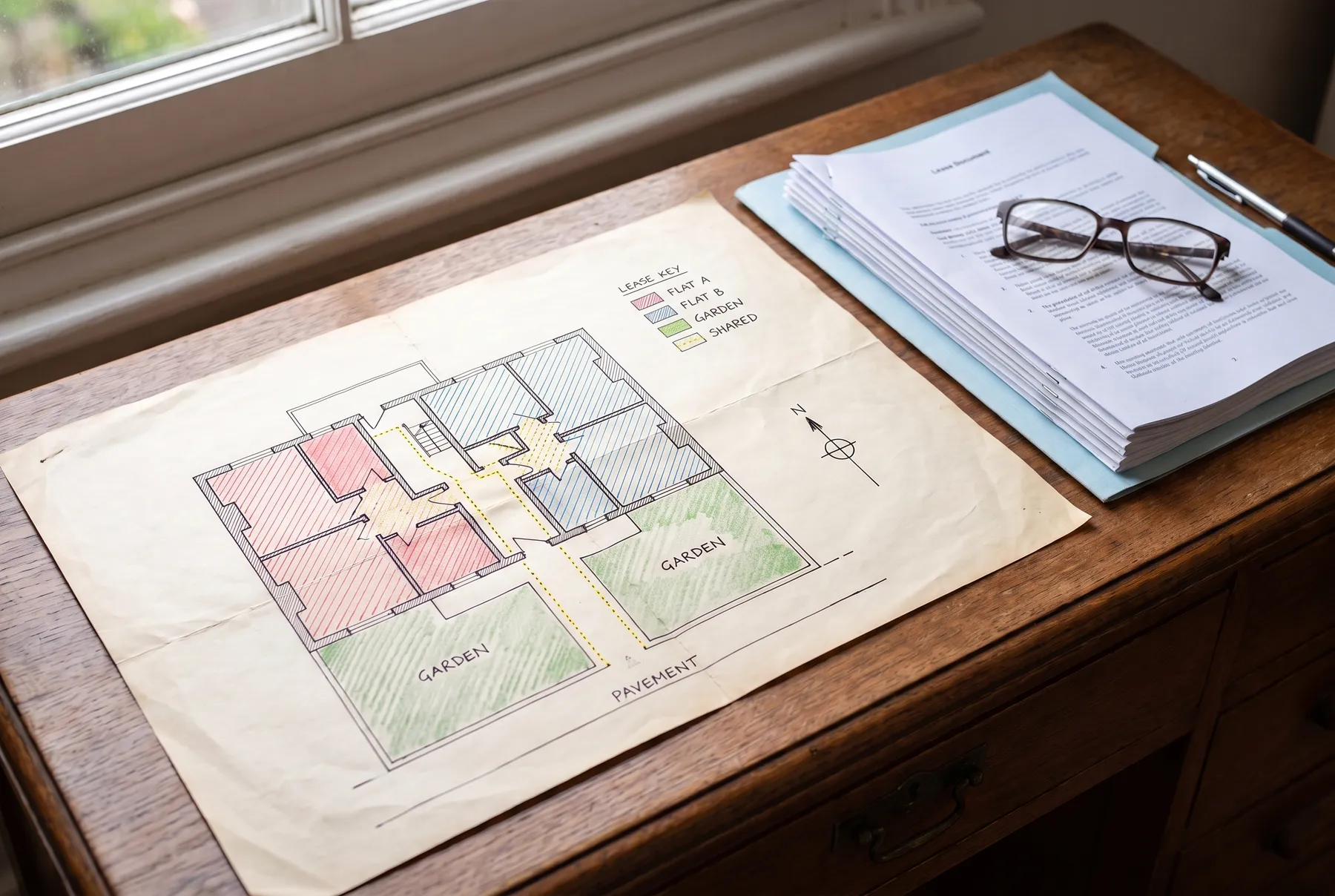
The lease plan may show the wrong flat, the wrong floor, or leave out a garden, a parking space or a loft that the flat has always used. The written description may not match the plan. These mistakes are common in older conversions.
Missing rights
A flat needs legal rights to use the shared entrance and stairs, the bin store, the pipes and cables that run through other parts of the building, and sometimes a path or driveway. If the lease does not grant these rights, the owner may have no legal right to things they have used for years.
Onerous ground rent, such as a rent that doubles every ten years, is a related problem but a different one: the lease works as drafted, the terms are simply unattractive. Our guide to ground rent problems when selling a leasehold flat covers it separately.
Why Lenders Care
A mortgage lender is lending against the flat, so it wants to know the building will be repaired, insured and properly managed for the whole of the mortgage. Lenders set out their requirements in the UK Finance Mortgage Lenders' Handbook, which conveyancers acting for them must follow. Among the leasehold requirements are adequate covenants for the repair and maintenance of the structure and the building, and for insurance.
If the buyer's solicitor finds a defect, they must report it to the lender. The lender then decides whether to lend as things stand, lend if an indemnity policy is put in place, or refuse until the lease is fixed. Lenders differ, so the same defect can stop one buyer and not another.
This is why a defective lease rarely matters until the day you sell, and why it usually surfaces mid-sale. For a buyer paying cash, without a lender, many defects are a price point rather than a deal-breaker.
How to Check Your Lease for Defects
Most sellers only find out about a defect when a buyer's solicitor or lender raises it, often after a sale has fallen through. If you have been told your lease may be defective and want to check it for yourself, these are the steps. A solicitor can then confirm what is wrong and how to fix it.
- Get a copy of the lease. If you do not have one, order a copy from HM Land Registry for £7 online.
- Find the repair and insurance clauses. Check who repairs the structure, the roof and the shared parts, and who insures the building.
- Check the service charge share. Note the percentage or fraction your flat pays, and ask the managing agent whether the shares across the block add up to 100 percent.
- Compare the plan with the flat. Check that it shows the right flat on the right floor, and any garden, parking space or storage you use.
- Ask a solicitor to review it. A leasehold solicitor can confirm whether there is a defect and check the lease against lenders' requirements, for a modest fee.
Our guide on how to read your lease explains where each clause usually sits and what the wording means.
The Four Ways to Fix a Defective Lease
The right route depends on the defect itself and whether the freeholder is willing to help. It also depends on how many leases in the building share the problem, and how soon you need to sell.
1. A deed of variation agreed with the freeholder
The simplest route is for you and the freeholder to sign a deed of variation, a legal document that changes the wording of the lease. It is registered at HM Land Registry and binds future owners. Legal fees are typically £1,000 to £4,000, and you will usually pay the freeholder's legal costs as well as your own. A simple variation with a cooperative freeholder takes 8 to 16 weeks; a more complicated one, or a slow freeholder, can take 4 to 9 months. Where the defect affects every flat, such as service charge shares, the other leaseholders may need to sign too. Our guide on how long a deed of variation takes goes into the timing.
2. An application to the tribunal for one lease
If the freeholder will not agree, either side can apply to the First-tier Tribunal (Property Chamber) in England, or the Leasehold Valuation Tribunal in Wales, under section 35 of the Landlord and Tenant Act 1987. The tribunal can vary a lease that fails to make satisfactory provision for:
- the repair or maintenance of the flat or the building;
- the insurance of the building;
- installations or services needed for a reasonable standard of accommodation;
- the recovery of money one party spends for the benefit of another;
- how the service charge is calculated, including shares that do not add up to 100 percent.
There is a tribunal fee of a few hundred pounds, plus your legal costs, and the process typically takes 6 to 12 months. A wrong plan or description is not one of these grounds. It is usually put right by a deed of rectification with the freeholder, or by a court order for rectification where both sides clearly meant something different from what was written.
3. An application to vary every lease in the block
Where the same defect runs through every lease, varying them one at a time does not work. Section 37 of the 1987 Act lets the freeholder or any leaseholder apply to vary all the leases together, if enough of the parties agree. Where there are fewer than nine leases, all or all but one of the parties must consent. Where there are nine or more, at least 75 percent must consent and no more than 10 percent may oppose. The freeholder counts as one party.
4. Fixing it as part of a lease extension
If you are extending your lease under the Leasehold Reform, Housing and Urban Development Act 1993, section 57(6) of that Act allows either side to require that a term of the existing lease is changed in the new lease, so far as needed to remedy a defect. That means a statutory lease extension can fix the defect at the same time. It only makes sense if you were going to extend anyway, since the professional fees are typically £3,000 to £7,500 plus the premium, and it takes 6 to 12 months. Our guide to how to extend your lease explains the process.
Selling Without Fixing It
Fixing a lease takes time. If you need to sell sooner, or the freeholder is slow or cannot be found, there are three ways to sell with the defect still in place.
Defective lease indemnity insurance
A one-off insurance policy, bought by the seller, that covers the buyer and their lender against losses caused by the defect. It typically costs £200 to £1,500 depending on the defect and the value of the flat, and can be in place within days. Some lenders accept a policy for some defects; others insist on the lease being fixed, especially for missing repair or insurance clauses. Your solicitor can ask the buyer's solicitor early whether the lender will accept one. Our guide to indemnity policies explains how they work.
Selling at auction
Auction buyers are mostly cash buyers and investors who read the legal pack before bidding and price the defect in. Contracts exchange when the hammer falls and completion follows within 28 days. The price is often 10 to 25 percent below market value. Our guide to selling at auction covers the process.
Selling to a cash buyer
A cash buyer does not need a lender's approval, so a defect that blocks a mortgage need not block the sale. The price reflects the defect and the cost of fixing it, and is usually 15 to 30 percent below market value, but the sale can complete in as little as 3 to 4 weeks. It suits sellers who need certainty, or whose defect would take a long time to fix. Our guide to selling to a cash buyer sets out the trade-offs.
The Routes Compared
| Route | Typical time | Typical cost | Best for |
|---|---|---|---|
| Deed of variation | 8 to 16 weeks if simple, up to 9 months | £1,000 to £4,000 in legal fees, plus the freeholder's costs | A cooperative freeholder and time before you sell |
| Tribunal, one lease (section 35) | 6 to 12 months | Tribunal fee of a few hundred pounds, plus legal costs | Repair, insurance or service charge defects where the freeholder will not agree |
| Tribunal, every lease (section 37) | 6 to 12 months | Shared between the parties | A defect running through the whole block |
| Lease extension (section 57(6)) | 6 to 12 months | £3,000 to £7,500 in fees, plus the premium | Owners who need to extend anyway |
| Indemnity policy | Days | £200 to £1,500 one-off | Minor defects, where the buyer's lender accepts it |
| Auction or cash buyer | 3 to 8 weeks | A lower price: 10 to 30 percent below market value | Sellers who need speed or certainty |
What to Do, and What Not to Do
Do:
- Have the lease checked before you go to market. A defect found by your own solicitor costs you time. A defect found by the buyer's solicitor can cost you the buyer.
- Tell your estate agent about any known defect. It is material information that buyers need, and an agent who knows can steer the sale towards buyers who can proceed.
- Ask early whether the buyer's lender will accept an indemnity policy. The answer decides whether a quick fix is available.
- Talk to the other leaseholders. If the defect affects the whole block, sharing the cost of one variation is cheaper for everyone.
Do not:
- Do not assume the lease is fine because nothing has gone wrong. Most defects are invisible until a lender reads the lease.
- Do not agree a deed of variation without your own solicitor. The freeholder's draft may change more than the defect, for example the ground rent.
- Do not hide a defect you know about. It will be found during the buyer's checks, and a late discovery does more damage than an early disclosure.
Sources and Further Reading
- Landlord and Tenant Act 1987, section 35: application to vary a lease of a flat, and the grounds.
- Landlord and Tenant Act 1987, section 37: varying two or more leases by majority.
- Leasehold Reform, Housing and Urban Development Act 1993, section 57: terms of a new lease, including subsection (6) on remedying defects.
- UK Finance Mortgage Lenders' Handbook, section 5.14, for lenders' leasehold requirements.
- Leasehold Advisory Service on an Upper Tribunal decision varying a defective lease.
- HM Land Registry, for a copy of your lease.
Frequently Asked Questions
A lease that leaves out or gets wrong something important about how the building is run. Common examples are no clear duty to repair the structure or roof, no duty to insure the building, service charge shares that do not add up to 100 percent across the block, a wrong plan and missing rights of access. The flat may be perfectly liveable, but many lenders will not lend on it until the lease is fixed or an indemnity policy is in place, and cash buyers usually reduce their offer to cover the cost of fixing it.
Yes. You can fix the lease first, sell with a defective lease indemnity policy if the buyer's lender accepts one, or sell to a buyer who does not need a mortgage, at auction or to a cash buyer. Fixing it usually gets the best price but takes weeks or months. Selling as it stands is faster but the price reflects the defect.
Usually by a deed of variation agreed with the freeholder, which typically costs £1,000 to £4,000 in legal fees and takes 8 to 16 weeks if straightforward. If the freeholder will not agree, you can apply to the tribunal under section 35 of the Landlord and Tenant Act 1987 for defects in repair, insurance, services, cost recovery or the service charge. If you are extending your lease anyway, the defect can be put right in the new lease under section 57(6) of the 1993 Act.
In practice, usually the leaseholder who needs it fixed, because they are the one trying to sell or remortgage. In a deed of variation you normally pay the freeholder's legal costs as well as your own. Where the defect affects the whole block, the leaseholders often share the cost, and a tribunal application can vary every lease at once.
Sometimes. Lenders differ, and so do defects. Some accept a policy for minor defects, such as a wrong plan or a small error in the service charge wording. Many will not accept one for a missing repairing or insurance clause, because those go to the heart of the lender's security. Your solicitor can ask the buyer's solicitor to check with the lender early, before anyone spends more money.
A simple deed of variation with a cooperative freeholder typically takes 8 to 16 weeks. A more complicated one, or one with a slow freeholder, can take 4 to 9 months. A tribunal application usually takes 6 to 12 months. An indemnity policy can be in place within days, but only helps if the buyer's lender accepts it.
Not under section 35, which covers repair, insurance, services, cost recovery and service charge calculations. A wrong plan or description is usually corrected by a deed of rectification signed with the freeholder. If the freeholder will not agree, the court can order rectification where it is clear that both sides meant something different from what was written.
If you have time and the freeholder is cooperative, fixing it first usually gets the best price and the widest choice of buyers. If the fix would take many months, or you need to sell quickly, selling with an indemnity policy or to a cash buyer may make more sense. Either way, have a solicitor check the lease before you go to market so the defect does not surprise you halfway through a sale.