
News · 27 April 2026
Why UK Flat Prices Are Falling Behind House Prices
Since 2020, house prices across the UK have risen considerably faster than flat prices. Here is why the divergence happened and what it means for anyone who owns a leasehold flat.
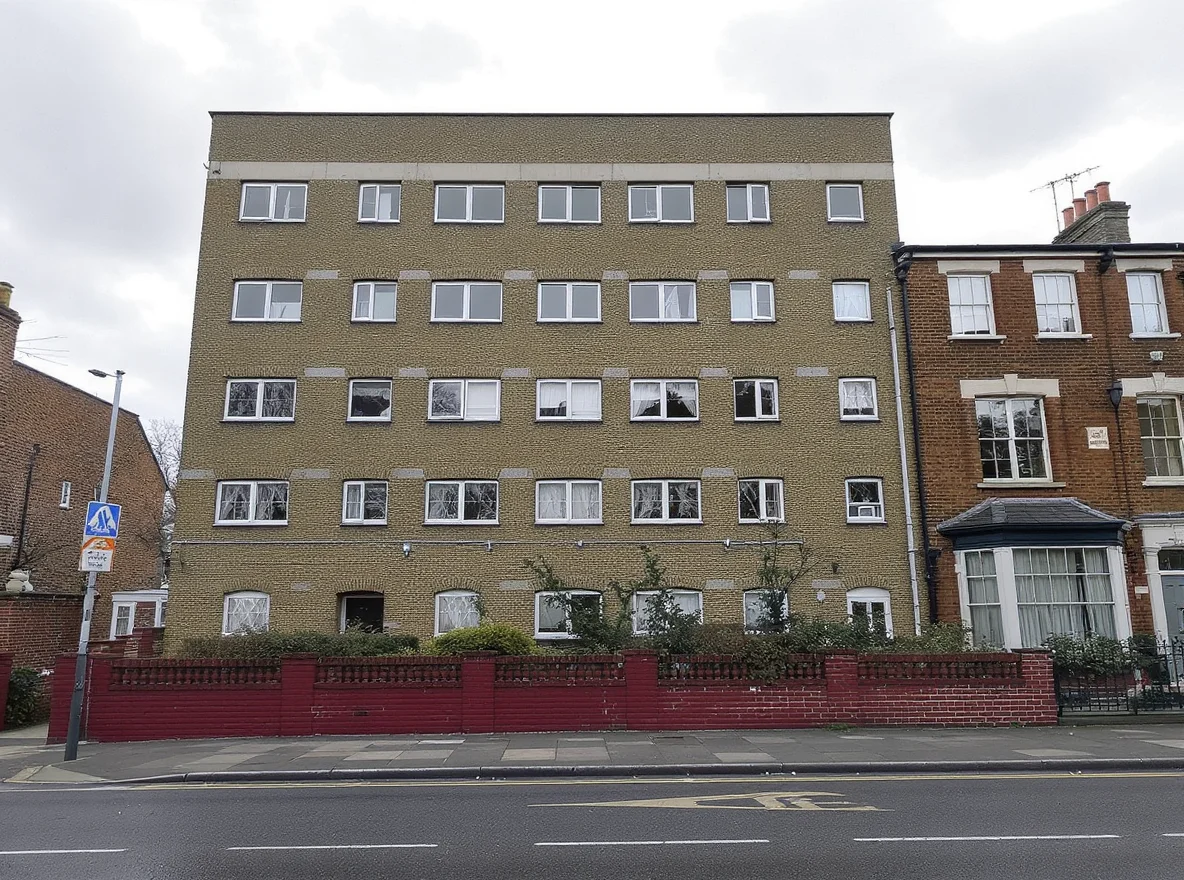
The Divergence at a Glance
For most of the post-war period, flats and houses in the UK followed broadly similar price trajectories. That relationship started to break down after 2020. Since the pandemic, house prices across the UK have risen considerably faster than flat prices, and in many parts of the country the gap has widened further rather than correcting. Understanding why this has happened matters to anyone who owns a leasehold flat, is thinking of buying one, or is trying to time a sale.
What the Data Shows
UK house price indices, including those published by Nationwide, Halifax and the Land Registry, have consistently shown houses (detached, semi-detached and terraced) outperforming flats on price growth since 2020. Nationwide data published in 2024 showed that detached house prices had risen roughly twice as fast as flat prices since the start of the pandemic. The gap was most pronounced outside prime central London, where flat demand has historically been strongest.
This does not mean flat prices have fallen everywhere. In absolute terms, many flats are worth more now than in 2019. The divergence is about the rate of growth: houses have pulled ahead, and in some markets flats have barely kept pace with inflation.
Why the Gap Opened
Remote working and the search for space
The pandemic triggered a significant shift in what buyers wanted from a home. With offices closed and hybrid working becoming permanent for many, buyers placed a much higher premium on space, outdoor areas and a separate room for working. Flats, particularly smaller ones in urban centres, were at a structural disadvantage. Demand moved toward houses with gardens, and prices followed.
The cladding crisis and EWS1 forms
The Grenfell Tower fire in 2017 set off a prolonged reckoning with building safety across the UK's flat stock. From 2019 onwards, mortgage lenders began requiring an EWS1 form (External Wall System assessment), a fire safety certificate for the external cladding of a building, before approving mortgages on flats in blocks of six storeys or more, and later on smaller blocks too. Many buildings either failed their assessments or could not obtain one at all, leaving owners unable to sell on the open market. Even buildings that eventually obtained a clean EWS1 spent years in limbo. The effect on values was significant: lenders would not lend, buyers could not buy, and prices stalled or fell.
Short lease anxiety
The leasehold reform debate that has dominated property policy since around 2017 has had an unintended side effect: it has made buyers far more aware of lease lengths and the costs associated with extending them. Buyers who might once have purchased a flat with 75 years on the lease without much concern are now more cautious, more likely to negotiate aggressively on price, or to walk away entirely. This heightened awareness has put modest downward pressure on prices for flats where the lease is under 90 years.
Service charge inflation
Annual service charges (the fees leaseholders pay to cover building insurance, maintenance and communal costs) have risen sharply since 2021. Higher energy prices, post-Grenfell safety compliance costs and general inflation have all contributed. For buyers calculating the true monthly cost of owning a flat, rising service charges reduce what they can afford to pay for the property itself.
Lender restrictions on certain flat types
Beyond cladding, some lenders have introduced or tightened restrictions on specific categories of flat: high-rise blocks above a certain number of storeys, blocks with certain construction methods (such as concrete panel systems), flats above commercial premises, and studio flats below a minimum square footage. These restrictions reduce the pool of available buyers for affected properties, which typically puts downward pressure on prices.
The retreat of buy-to-let investors
Landlords buying flats to let have historically been a significant source of demand. Since 2016, a series of tax and regulatory changes have made the economics of owning a rental flat much less attractive: the stamp duty surcharge on additional properties, introduced at 3 percent in 2016 and raised to 5 percent in October 2024, the phased removal of mortgage interest tax relief under Section 24 of the Finance Act 2015, and tighter lending criteria for buy-to-let mortgages. A further change is already law but has not yet taken effect: from 6 April 2027 rental profit is taxed at its own rates of 22, 42 and 47 percent, two points above the equivalent main income tax rates. That falls on rent received, not on the sale of a flat. Many investors have left the market or reduced their portfolios, and new landlord demand has not recovered to pre-2016 levels. Flats, which make up most of the rental stock, have felt this more than houses.
What This Means for Flat Owners
For someone who bought a flat in 2015 and is now looking to sell, the divergence can be frustrating. Not only has the property likely grown in value more slowly than a comparable house, but the selling process itself can be harder: fewer buyers qualify for mortgages on certain flat types, leasehold complications arise during conveyancing, and buyers are more likely to negotiate on price once they understand the running costs.
This does not make flats unsaleable. Well-maintained flats with long leases, clean EWS1 certificates and reasonable service charges continue to sell on the open market. The difficulties tend to concentrate at the margins: short leases, cladding complications, high service charges, or blocks with known structural issues.
Will the Gap Close?
There are reasons it might narrow. If the remaining provisions of the Leasehold and Freehold Reform Act 2024 (LAFRA) are brought into force, particularly the abolition of marriage value and the move to 990-year extension terms, the financial risk of buying a flat with a shorter lease would reduce significantly, potentially bringing buyers back to a segment of the market that has been avoided. Progress on building safety remediation is also removing the EWS1 barrier for an increasing number of blocks.
Urban rental demand has remained strong, and with hybrid working now normalised rather than novel, the extreme flight from city flats seen in 2020 and 2021 has moderated. First-time buyers priced out of houses in many cities continue to turn to flats as the more affordable entry point.
On the other hand, some of the structural pressures are not going away quickly. Service charges look likely to remain elevated. Lender policies on certain flat types have not relaxed materially. And the buy-to-let retreat is a policy-driven shift that would require significant tax changes to reverse.
The most likely outcome is a gradual narrowing rather than a rapid correction. Flat prices in well-located urban areas with clean titles and long leases will probably keep pace with houses more closely than those with complications. The divergence is most likely to persist, and may widen further, for the portion of the flat market that carries leasehold risk, cladding uncertainty, or structural barriers to mortgage finance.