
Leasehold Advice
How Your Block Is Managed: Freeholder, Managing Agent, RMC and RTM
Three or four roles run almost every leasehold block in England and Wales: the freeholder, the managing agent, the leaseholders themselves and in some blocks an RMC or RTM company acting on the leaseholders' behalf. This guide explains who does what, who you actually pay, and who to call when something goes wrong.
At a Glance
Three or four roles run almost every leasehold block in England and Wales: the freeholder, the managing agent, the leaseholders themselves and (in some blocks) a Resident Management Company (RMC) or a Right to Manage company (RTM) acting on the leaseholders' behalf. Most leaseholders only ever speak to the managing agent, which makes the rest feel like background noise. They are not.
The freeholder owns the building. The managing agent is hired to do the day-to-day work. An RMC or an RTM company is the leaseholders' way of running the block themselves; the difference between them is whether that arrangement was built in by the developer or set up by the leaseholders later on. Knowing which of these your block has tells you who you can hold to account and what your options are when something is not working.
This guide is general information about how leasehold blocks are run in England and Wales, not legal advice; the rules for your own block come from your lease.

The Freeholder
The freeholder owns the freehold of the building: the structure, the roof, the foundations, the land it sits on, the common parts. They are the party who originally granted each lease and who is named as "the Lessor" or "the Landlord" in the lease document itself. For the foundational picture of how this fits together, see Leasehold vs Freehold explained.
Who freeholders actually are
The freeholder can be many things: a large investment company that owns thousands of freeholds across the country, a small private landlord with a handful of buildings, a charity or housing association, a local authority, the original developer (sometimes still holding the freehold years after the last flat was sold) or in some blocks the leaseholders themselves through a Resident Freehold Company (a form of share of freehold). Each of these can behave differently, which affects how responsive they are and how they handle consents, charges and repairs. A residents' company is run by the leaseholders for the building itself; an external freeholder may have other priorities.
What the freeholder actually does (and does not do)
The freeholder's job is to ensure the building runs as the lease requires: structure maintained, building insured, service charges collected, common parts kept in good order. In practice they almost always delegate this to a managing agent. The freeholder rarely speaks to leaseholders directly. What they retain is the legal authority: granting lease extensions, consenting to alterations, issuing notices under the lease and ultimately taking action if a leaseholder fails to comply.
The lease is the freeholder's main lever. Anything they ask you to do, or any consent they refuse, has to be tested against what the lease actually says. If a freeholder is being obstructive, the answer is usually in the lease and in statute, not in negotiation.
The Managing Agent
The managing agent is the firm hired to do the practical work of running the block. Collecting the service charge, arranging buildings insurance, instructing contractors for repairs, running the lift and entry-system contracts, answering leaseholder enquiries, issuing Section 20 notices for major works, providing the management pack on a sale. In most blocks, the managing agent is the only party a leaseholder ever actually speaks to.
Who they answer to
The managing agent is a contractor. They answer to whoever hired them. In a standard block that is the freeholder. In a block with an RMC, it is the RMC (and through it, the leaseholders themselves). In a block with an RTM company, it is the RTM company (again, the leaseholders). This distinction matters when you want to change agents: in an RMC or RTM block, the leaseholders can vote to do so; in a freeholder-controlled block, the leaseholders cannot.
The Property Institute and other trade bodies
The managing agent profession in the UK is not statutorily regulated. The main voluntary professional body is The Property Institute (TPI), formed in 2022 from the merger of ARMA (the Association of Residential Managing Agents) and IRPM (the Institute of Residential Property Management); member firms commit to a published code of practice and a complaints procedure. Membership is a useful signal of professionalism but is not a guarantee of good service, and the absence of membership is not automatically a problem. Many smaller managing agents are not TPI members and still run blocks well; some TPI members are mediocre. Look at recent reviews, talk to other leaseholders in the building and weigh TPI membership as one factor among several.
When the managing agent is the problem
A slow or unresponsive managing agent is a common complaint from leaseholders. The route you have depends on who hired them. Service-charge challenges at the First-tier Tribunal (Property Chamber) in England, or the Leasehold Valuation Tribunal in Wales, test reasonableness of charges; complaints the agent's own procedure does not resolve can be taken to the redress scheme the agent belongs to, The Property Ombudsman or Property Redress; setting up an RTM company is the bigger lever when the agent is hired by the freeholder. Our page on dealing with a difficult managing agent covers the practical options.
RMC and RTM: When Leaseholders Take Control
In many blocks the leaseholders, rather than the freeholder, are the ones who actually run the building. There are two main routes by which this happens, and they are often confused.
Resident Management Company (RMC)
An RMC is a limited company, usually set up by the original developer at the time the block was built. It is named in each lease as the party responsible for managing the block, and each leaseholder is usually entitled or required to become a member of the RMC when they buy a flat, though the exact position depends on the lease and the company's articles. The freeholder typically still owns the freehold but has delegated day-to-day management to the RMC under the terms of the lease itself. The RMC, in turn, usually hires a managing agent to handle the work.
An RMC is the developer's way of handing management to the leaseholders from day one. It is common in new-build blocks. You can check whether your block has an RMC by looking at your lease (the management company will be named) or by searching Companies House for a company at your building's address.
Right to Manage (RTM) company
A Right to Manage company is set up later, after the building has been occupied, by the leaseholders themselves. It uses a statutory right under the Commonhold and Leasehold Reform Act 2002 to take over management from the freeholder. The leaseholders form the RTM company, serve formal notices on the freeholder and (subject to qualifying conditions) take over management of the block without buying the freehold itself.
The qualifying rules have just become more accessible. Under the Leasehold and Freehold Reform Act 2024, from 3 March 2025 a block now qualifies for the Right to Manage if it has up to 50 percent non-residential use, where the previous cap was 25 percent. That brings many mixed-use buildings (flats above shops, for example) into scope for the first time. For the full mechanics of how to set one up, see our dedicated page on Right to Manage explained.
How to tell which (if either) applies to your block
You can find the answer in three places: the lease, the title register and a recent service charge demand. The lease itself: a properly drafted lease names the management company if the building has an RMC. The title register from HM Land Registry: it sometimes records a notice if an RTM has been exercised. Service charge demands: they show whom you actually pay, which is the easiest day-to-day check. If your service charge demand is issued by, or on behalf of, a company whose name refers to your building, that company is almost certainly an RMC or an RTM. The company's registered address is not a reliable guide on its own: RMC and RTM companies often use their managing agent's office as the registered office rather than the building itself. If the demand names the freeholder as the party you pay, with no management company in the picture, usually neither route has been taken, though in a share of freehold building the freeholder may itself be a company the leaseholders own.
Who to Contact When Something Goes Wrong
For most day-to-day issues the answer is the managing agent. They handle repairs, service charge queries, neighbour disputes about communal areas, contractor problems and the management pack on a sale. They are also the right first contact for most complaints. Six categories cover almost everything.
Day-to-day repairs, service charge questions, communal issues
Managing agent. If the agent does not respond within a reasonable time (a working week is the usual benchmark, faster for urgent items), escalate to the named individual handling your block and ask for the firm's complaints procedure in writing.
Lease extension, deed of variation, sale of the flat
These need the freeholder's involvement under the lease. In practice the request still goes through the managing agent, who will pass it to the freeholder; the freeholder issues notices, consents and the management pack via the agent. Allow several weeks for any formal response; an obstructive freeholder can stretch this further. For the practical workflow on a Deed of Variation, see our timeline guide.
Consent for alterations or subletting
Freeholder (via the managing agent). The lease will set out what consent is needed and what conditions apply; many alterations need a formal licence to alter.
Service charge dispute
First, the managing agent (raise the specific charge in writing). If unresolved, the First-tier Tribunal (Property Chamber) in England, or the Leasehold Valuation Tribunal in Wales, hears applications under the Landlord and Tenant Act 1985 on the reasonableness of service charges. For the wider picture, see our service charges explained page.
Complaint about the managing agent
The agent's own complaints procedure first (firms are required to publish one). Once the agent has issued its final response, or eight weeks have passed without resolution, escalate to the redress scheme the agent belongs to: The Property Ombudsman or Property Redress. These are voluntary redress schemes, not regulators, but they can order remedies in many cases. If the agent is a TPI member, you can also report a breach of its code of practice to TPI: that is a route to disciplining the firm rather than to compensation. For wider reform: setting up an RTM company gives the leaseholders the power to change agent altogether.
The freeholder or managing agent has stopped functioning
A last-resort route exists where the freeholder or their agent has fundamentally failed in their duties. Section 24 of the Landlord and Tenant Act 1987 allows the First-tier Tribunal (the Leasehold Valuation Tribunal in Wales) to appoint a manager in place of the freeholder. A preliminary notice normally has to be served first, and some landlords and situations are excluded, so the requirements need checking. It is rare, slow and expensive, but it is the backstop. For most cases, an RTM is faster and easier to set up than seeking a tribunal-appointed manager.
Building safety in a higher-risk building (England)
In England, a higher-risk building (broadly, one at least 18 metres tall or with at least 7 storeys, containing two or more residential units) has an Accountable Person, and where more than one body is responsible, a Principal Accountable Person, under the Building Safety Act 2022. They are responsible for assessing and managing the building's fire and structural safety risks and are a point of contact for safety concerns, usually working through the managing agent. Wales has its own building safety arrangements.
Further Reading
Two related guides go deeper on the parts of block management that cause sellers the most trouble: what your service charge pays for, and what to do when there are problems with your managing agent.
Frequently Asked Questions
The freeholder owns the freehold of the building and is the ultimate party in the lease. The managing agent is a separate firm hired to handle day-to-day management: collecting the service charge, arranging insurance and repairs, dealing with leaseholders' enquiries. The managing agent answers to whoever hired them (the freeholder in most blocks, or an RMC or RTM company where the leaseholders have taken control). Practically, the managing agent is who you actually speak to most of the time; the freeholder is who they are accountable to under the lease.
An RMC (Resident Management Company) is usually set up by the original developer when the building is built. Each leaseholder is usually entitled or required to become a member, and the RMC is given the job of running the building under the terms of the lease itself. An RTM (Right to Manage) company is set up later by the leaseholders themselves, using a statutory right under the Commonhold and Leasehold Reform Act 2002 to take over management from the freeholder. An RMC is built into your lease from day one; an RTM is something you and your neighbours set up voluntarily later. The day-to-day effect is similar: the leaseholders, through their company, run the block.
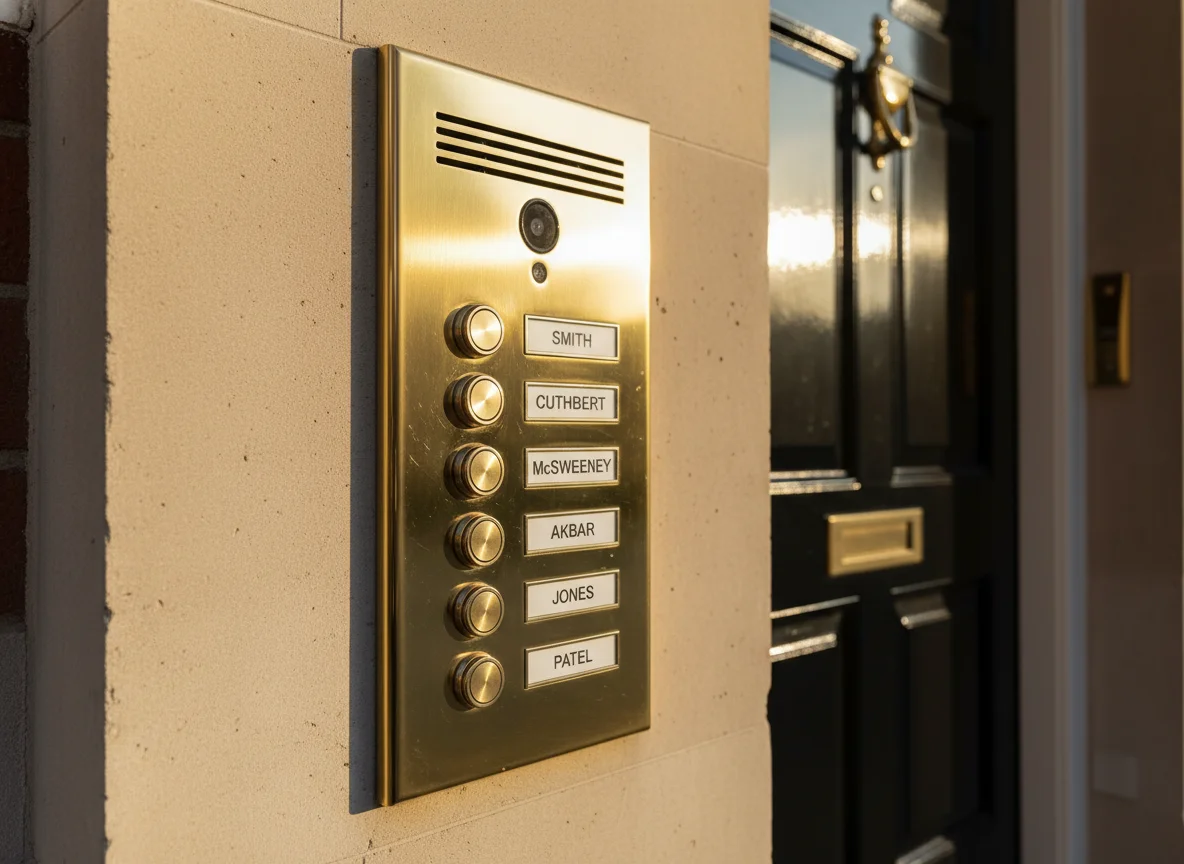
Three quick checks. First, your service charge demand: it shows who you pay and is often issued by the managing agent on the freeholder's or RMC's behalf. Second, your title register from HM Land Registry (£7 online) lists the freeholder and any restrictions, including notices about an RMC or RTM. Third, the building entrance: managing agent signage, the notice board or the intercom panel often names the firm responsible. If you still cannot tell, asking your neighbours or a long-standing leaseholder is the fastest way.
Yes, but how easily depends on who hired them. If the building is run by an RMC or RTM company, the leaseholders (as members of that company) can vote to change the managing agent at a general meeting. If the freeholder hired the managing agent and the leaseholders have not formed an RTM, the freeholder makes the decision; leaseholders can apply pressure through service charge challenges or by setting up an RTM company, but they cannot directly dismiss the agent. The Right to Manage process exists for exactly this situation.
You pay whoever your lease names as the recipient. In a standard block, that is the freeholder, but in practice the demand comes from the managing agent on the freeholder's behalf. In a block with an RMC, you pay the RMC, again usually via the managing agent. In a block with an RTM, payment routes through the RTM company. The destination of the money is set out in the service charge demand itself; if it looks wrong, ask the managing agent before paying.
The Property Institute (TPI), formed in 2022 from the merger of ARMA (the Association of Residential Managing Agents) and IRPM (the Institute of Residential Property Management), is the main UK professional body for residential managing agents. Membership is voluntary, not statutory: managing agents are not regulated as a profession in the way solicitors are. TPI member firms sign up to a published code of practice and a complaints procedure. It is a useful badge of standards, but it is not a guarantee of good service. If your managing agent is not a TPI member, that is not automatically a bad sign; it is one of several things to weigh.
Smaller blocks (often two to six flats in converted houses) are sometimes run directly by the freeholder or by the leaseholders themselves through an RMC, with no managing agent in the middle. This is common in share of freehold buildings and works fine when the leaseholders cooperate. The trade-off is that someone has to do the work: insurance, accounts, statutory filings, collecting contributions. If the building has no managing agent and no one is doing the work, the building tends to drift, and the next sale picks up the consequences (lapsed insurance, no service charge accounts, no reserve fund).
A Residents Association is a group of leaseholders, and sometimes other residents, organised to represent the collective view to whoever runs the building. It is an advocacy body, not a management one: unlike an RMC or RTM, it does not own anything, does not employ the managing agent and has no general legal authority over the building. A formally constituted association can apply for Recognised Tenants' Association status under Section 29 of the Landlord and Tenant Act 1985, granted by the landlord or by the First-tier Tribunal (or, in Wales, the Leasehold Valuation Tribunal). Recognition unlocks specific statutory rights: to be consulted on service charges and major works; to inspect documents; to appoint a qualified surveyor to advise on service charge matters and inspect relevant documents and the common parts; and to be consulted about the appointment or reappointment of the managing agent. A block can have both a Residents Association and an RMC or RTM; they serve different purposes.