
Sellers' Guide
Selling a Flat With Structural Problems or Subsidence
Cracks or subsidence are harder to deal with in a flat than in a house. A house owner can get a quote and fix the problem. A flat owner usually cannot, because the structure belongs to the freeholder and several people have a say. This guide explains who decides, how buyers and lenders react, what it does to the price and the paperwork that keeps a sale on track.
Can You Sell a Flat With Structural Problems?
If you own a house and find a crack, the decision is yours. You get an engineer in and a quote, then either fix it or knock £20,000 off the price. A buyer can see exactly what they are taking on.
A flat is different. The walls, roof and foundations are usually not yours to repair. Before anyone can talk about cost, several people have to agree that there really is a problem, what is causing it and whose job it is to put it right. Some may say the crack is cosmetic, others that it is serious. Until that is settled, nobody can tell a buyer what the fix will cost, and an open question like that worries buyers far more than a known bill.
This guide explains how that plays out in a sale and what you can do to give a buyer the clearest possible picture.

This guide is general information, not legal or structural advice. It covers England and Wales.
Written and kept up to date by the Sell Flat UK team at LDN Properties Ltd, who have bought flats with structural issues since 2003. Last reviewed on 9 October 2026.
What Counts as a Structural Problem?
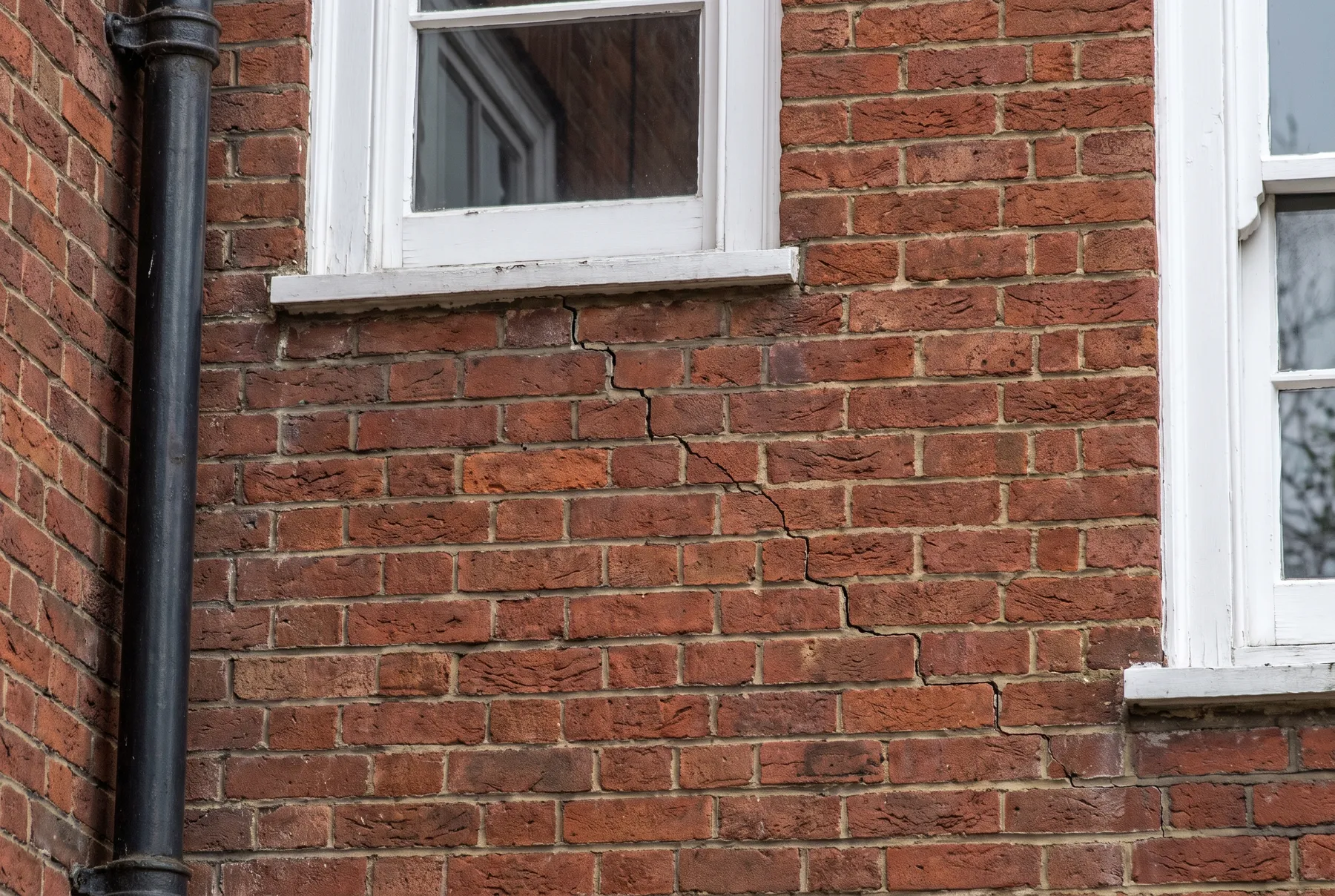
A structural problem affects the parts of the building that hold it up: the foundations, the main walls, the floors, the roof structure and the beams and lintels over openings. Most cracks are not structural. Plaster shrinks, new paint shows old hairline cracks and buildings settle slightly over their first few years.
The common causes
- Subsidence. The ground under the foundations moves down. In London this is most often clay soil shrinking in a dry summer, helped along by nearby trees drawing out moisture. Leaking drains that wash soil away are another common cause.
- Heave. The opposite: clay swells as it gets wetter, often after a large tree is cut down, and pushes the foundations up.
- Wall tie failure. The metal ties holding the two layers of a cavity wall together rust and expand, which cracks the outer brickwork along the mortar lines.
- Failed lintels and removed walls. A sagging lintel over a window, or an internal wall taken out without proper support, sometimes in a neighbouring flat.
- Roof spread. Roof timbers push the tops of the walls outwards, often after a heavier roof covering was fitted.
How cracks are graded
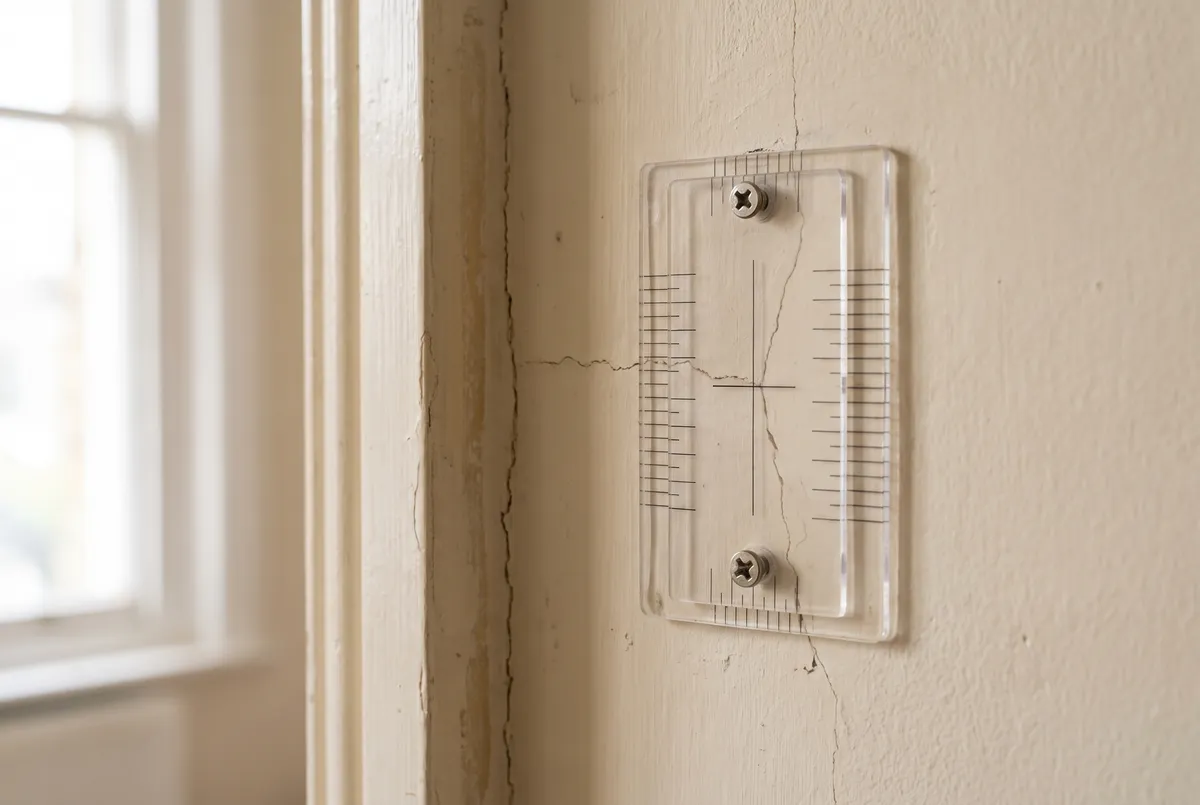
Engineers and insurers usually grade cracks using a scale published by the Building Research Establishment (BRE), from category 0 to 5. Categories 0 to 2, cracks up to about 5mm wide, are generally treated as cosmetic. Category 3, about 5 to 15mm, is moderate and usually needs some repair. Categories 4 and 5, cracks of 15mm and wider, are severe and need major work. The width is only part of the picture. The pattern of the cracks, and whether they are still growing, tell an engineer much more.
Who Is Responsible in a Block of Flats?
This is the question that causes most of the trouble in a sale. Your lease sets out who repairs what. In most purpose-built blocks and many conversions, the freeholder keeps the structure, roof, foundations and outside walls, repairs them and recovers the cost from the leaseholders through the service charge. Your own lease usually covers only the inside of your flat: the plaster, floors and fittings, and sometimes the windows.
There are exceptions. In some converted houses, the lease gives the ground-floor flat the foundations and the top-floor flat the roof. In a share of freehold block, the leaseholders own the freehold together, so they are the people who have to decide and pay. Your solicitor can check exactly what your lease says.
The people involved
In a house, one owner makes every decision. In a block of flats, a structural problem can involve all of these:
| Who | What they decide |
|---|---|
| The freeholder | Whether to investigate, whether to claim on the insurance and whether to carry out repairs |
| The managing agent | How quickly the problem is reported and chased, and what the management pack tells a buyer |
| The insurer and its loss adjuster | Whether the damage is covered, whether to monitor first, what repair to fund and what excess applies |
| Structural engineers | Whether the movement is still active and what is causing it. Different engineers can disagree. |
| The other leaseholders | In a share of freehold, whether to act and how to fund it. Otherwise, whether to support or dispute the costs. |
| Third parties | A neighbour or the council if a tree is to blame, or a water company if a shared drain is leaking |
Any one of these can slow things down. A freeholder who disputes that there is a problem, an insurer that wants another year of monitoring or a neighbour who will not remove a tree can each leave the question open for months.
If the freeholder will not act
A freeholder who is responsible for the structure but does nothing is breaking the lease. Leaseholders can take court action to enforce the repairing obligation, apply to the tribunal to appoint a manager or take over management themselves through the Right to Manage. Each of these takes months, so they rarely help a sale that is already under way. Our guide to dealing with a difficult managing agent covers the first steps.
The Questions That Need Answering Before Price
In our experience, a buyer can usually live with a known repair at a known cost. What puts them off is not knowing. These questions come up in roughly this order, and each depends on the one before:
- Is it really a problem? The freeholder, the buyer's surveyor and the leaseholders may not agree whether a crack is cosmetic or structural. An engineer's report is usually what settles it.
- What is causing it? Subsidence from a tree needs a different fix from a leaking drain or a failed lintel, and the cause often decides who pays.
- Who is responsible? The lease decides who must carry out the repair. A third party, such as a neighbour with a tree or a water company, may also be liable.
- Who pays? If the block's buildings insurance covers the damage, the cost to leaseholders may be limited to the excess. If it does not, the freeholder recovers the cost through the service charge, usually with a section 20 consultation for larger works.
- When will it be fixed? An insurer may monitor the movement for a year or more before deciding on a repair, and some repairs take months.
The further down this list you are when you sell, the easier the sale. A flat where all five are answered, with paperwork to prove it, is a very different prospect from one where the freeholder has not yet agreed to investigate.
How Buyers and Lenders React
The survey and the valuation
A buyer's surveyor or the lender's valuer will notice significant cracking, sloping floors or doors that stick. If they suspect movement, they will usually recommend a report from a structural engineer before the buyer goes any further. The lender may hold back part of the mortgage until repairs are done, lower its valuation or decline to lend while the problem is unresolved. Our guide to responding to the buyer's survey explains how to handle what comes back.
Insurance
Here a flat usually has one advantage over a house. In most blocks the buildings insurance is a single policy for the whole building, arranged by the freeholder, so the buyer does not have to find their own subsidence cover. The Association of British Insurers (ABI) says it is good practice for an insurer that has handled a subsidence claim to keep offering cover on reasonable terms. The premium and the subsidence excess may go up after a claim, though, and the buyer will see both in the service charge. Our guide to buildings insurance for leasehold flats explains how the block policy works.
What the buyer's solicitor will ask
The property information forms you complete ask about insurance claims, building work and disputes, and the managing agent answers similar questions in the LPE1, the standard form at the heart of the management pack. If you market through an estate agent, known structural problems are material information that has to be given to buyers. Hiding a problem you know about can lead to a claim for misrepresentation after completion, so the only real choice is how well you present it.
How Much Does It Affect the Price?
It depends far more on how settled the problem is than on how bad it was. As a rough guide, from what we see:
| Situation | Typical effect on price | What buyers usually want |
|---|---|---|
| Historic movement, repaired and signed off, with full paperwork | Little or none | The completion certificate, any guarantee and confirmation that the block is still insured on normal terms |
| Monitoring under way, or gaps in the paperwork | About 10 to 20 percent | The engineer's view, monitoring results so far and an idea of who will pay if repairs are needed |
| Active movement, an unresolved claim or disputed responsibility | About 20 to 40 percent, sometimes more | Most mortgage buyers cannot proceed. Cash buyers price in the worst likely outcome. |
These are typical ranges, not a valuation. The size of the eventual repair, the value of the flat and the state of the local market all move the figure. The biggest single factor is uncertainty. A buyer who cannot find out who will pay for a repair, or when, will assume the worst and price accordingly.
Paperwork to Gather Before You Sell
The aim is to answer as many of the five questions above as you can before a buyer asks them. Ask the managing agent or freeholder for copies of:
- Any structural engineer's reports on the building
- Correspondence about insurance claims, including the insurer's decision letters
- Monitoring results, and the date monitoring started and is due to end
- The certificate of structural adequacy or completion letter once repairs are finished
- Guarantees for underpinning, wall tie replacement or other repairs
- Any section 20 notices for the work, and the current insurance schedule showing the subsidence excess
If the problem has been settled for years, this may only take a few emails. If it is still open, ask the managing agent for a short written update on where things stand. Even an honest "monitoring ends in March and the insurer has accepted the claim" helps a buyer far more than silence.
Your Options
| Option | How it works | Best for |
|---|---|---|
| Wait for the repair and sign-off | Let the insurer or freeholder finish the work, then sell with a completion certificate | Sellers with time, where the claim is accepted and repairs are scheduled |
| Sell now through an estate agent | Disclose the problem from the start, with every report and letter you have | Repaired or minor problems, where the paperwork tells a clear story |
| Sell at auction | Buyers inspect, read the legal pack and bid. Most bidders are cash buyers. | Active problems where a quick, certain sale matters more than the price |
| Sell to a cash buyer | The buyer prices the problem in and does not need a mortgage | Unresolved problems, disputed responsibility or a sale that has already fallen through |
Waiting usually gets the best price, but only if there is an end in sight. If the freeholder is not engaging, or the insurer has declined the claim, waiting can mean years. Our guides to selling at auction and selling to a cash buyer compare the faster routes, and our page on unmortgageable flats covers flats that lenders will not currently lend on.
What to Do, and What Not to Do
Do:
- Report new cracks to the managing agent in writing. The sooner the freeholder and insurer know, the sooner the questions start to get answered.
- Get the paperwork together before you go to market. A buyer who sees reports and letters at the first viewing is far less likely to walk away later.
- Ask what stage things are at. Find out whether the insurer has accepted the claim, when monitoring ends and when repairs are expected.
- Check your lease. Your solicitor can confirm who is responsible for the part of the building that is moving.
Do not:
- Do not fill and paint over cracks before a sale. Surveyors look for fresh decoration, and covering up a known problem can lead to a misrepresentation claim.
- Do not commission repairs to the structure yourself. It is usually the freeholder's job, and doing it yourself can affect the insurance claim.
- Do not assume a crack is serious. Many are cosmetic. An engineer's report can be the cheapest way to protect the price.
Sources and Further Reading
- Association of British Insurers: Subsidence: how subsidence claims work and the guidance on continuing cover.
- BRE: Assessing cracks in houses: the category 0 to 5 crack damage scale.
- Institution of Structural Engineers: how to find a chartered structural engineer.
- RICS: the types of survey a buyer may commission.
- Leasehold Advisory Service: free guidance on repairs, service charges and freeholder obligations.
Frequently Asked Questions
Yes. If the subsidence was repaired some time ago and you have the insurer's completion certificate or an engineer's sign-off, it usually makes little difference to the price. Ongoing monitoring or an unresolved problem has a bigger effect, typically 10 to 40 percent, and many mortgage buyers will not proceed until the problem is settled.
Usually the freeholder. Most leases keep the structure, roof, foundations and outside walls with the freeholder, who repairs them and recovers the cost through the service charge. Some converted houses give the foundations or roof to individual flats, and in a share of freehold the leaseholders decide together. Your lease has the final say.
In a house, the owner can get a quote, decide to fix it or reduce the price, and the buyer knows the cost. In a flat, the freeholder, managing agent, insurer, engineers and other leaseholders may all be involved, and they first have to agree whether there is a problem and whose job it is. Until then nobody can put a figure on it, and buyers dislike that uncertainty.
You do, if you know about them. The property information forms ask about insurance claims, building work and disputes, and the managing agent is asked similar questions for the management pack. An estate agent must also give buyers material information. Hiding a known problem can lead to a misrepresentation claim after completion.
In most blocks of flats, the freeholder insures the whole building under one policy, so the buyer does not need their own buildings cover. Insurers are expected to keep offering cover after a subsidence claim on reasonable terms, but the premium and the subsidence excess may rise, and those costs come through the service charge.
It varies, but insurers often monitor for a year or more, so that they can see how the building moves through wet and dry seasons before deciding on a repair. That can hold up a sale through an estate agent. Ask the managing agent when monitoring started and when the insurer expects to decide.
If the problem is repaired and signed off, usually yes. If movement is still active or responsibility is disputed, many lenders will hold back part of the mortgage, lower the valuation or refuse to lend until it is resolved. That is why flats with unresolved problems often sell to cash buyers or at auction.
Often, yes. Many cracks turn out to be cosmetic, and an engineer's report that says so can stop a buyer's surveyor from assuming the worst. If the problem is the freeholder's responsibility, ask the managing agent first whether a report already exists, as the freeholder or insurer may have commissioned one.